
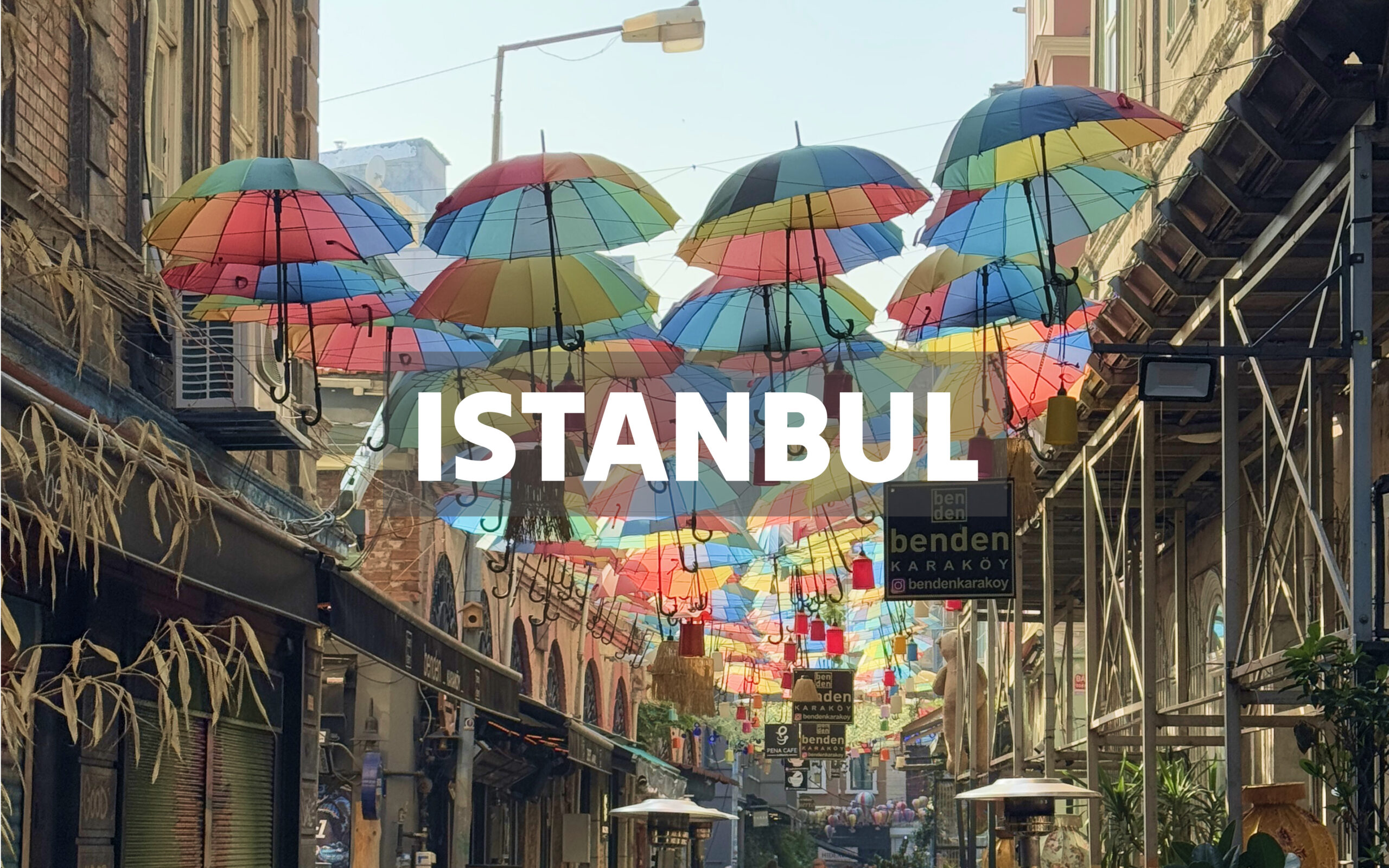
If you’re visiting Istanbul for the first time and only have three days, this itinerary will help you see the highlights without running yourself into the ground.
Over the next 3 days, you’ll hit the big icons (yes, the classics), wander through local neighbourhoods, dip into markets and mosques, hop on a Bosphorus ferry, and build in plenty of food breaks because Istanbul is not a “grab-a-sandwich-and-go” kind of city. This route is based on my own trip, including a few small mistakes, happy surprises, and those moments where I genuinely thought, okay, this is perfect.
Day 1 – Feel the City’s Atmosphere
Traditional Turkish Breakfast in Istanbul: Where to Try Kahvaltı
The best way to start getting to know Istanbul is, honestly, with food. And not just any food – with a proper traditional Turkish breakfast, kahvaltı. It’s been part of Turkish culture since Ottoman times and originally came from a mix of simple dishes of Central Asian nomads and medieval European staples: bread, meat, cheese, olives. Over the centuries it grew bigger and richer, turning into the huge spread you see today – from familiar breakfast basics to little plates of jams, fruits, spreads and, of course, endless traditional Turkish tea.
Kahvaltı is also a whole mood. It’s about a slow, lazy start to the day, the kind where you sit, talk, snack from ten different plates at once and watch the city wake up around you. Morning is the perfect time to feel Istanbul before it gets crowded and noisy closer to midday.
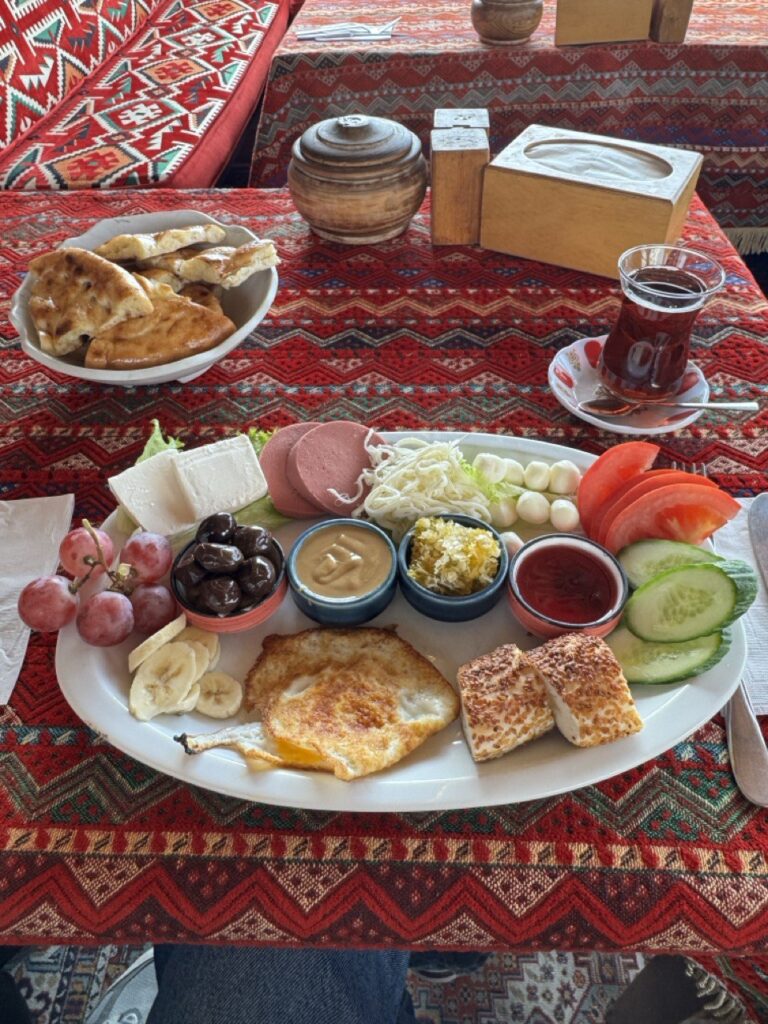
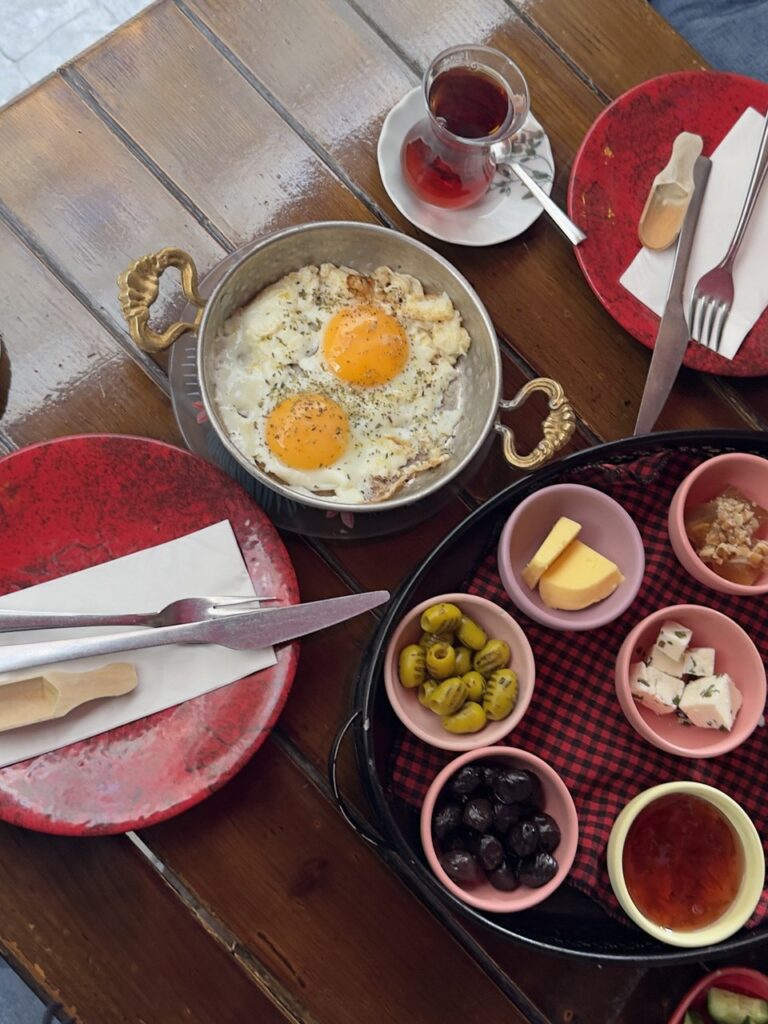
Usually you’ll have a few portion options on the menu: individual breakfasts, and bigger sets made for couples or groups. Just be a bit careful when choosing where to go. On the main tourist streets or in cafés with super popular panoramic views, prices can easily be two or three times higher than in more local spots a few blocks away.
On the map at the bottom of this article, you’ll find a few great spots where I tried Turkish breakfast in Istanbul.
Taksim Square to Istiklal Street Walk: Istanbul’s Classic First-Timer Route
After breakfast, it’s time to actually meet the city. I’d start with the Beyoğlu area and do the classic first-timer route: from Taksim Square down the main pedestrian boulevard, Istiklal Avenue.
Taksim is like Istanbul’s social crossroads. Most transport lines somehow connect here, it’s a popular spot for public events and celebrations, and right in the middle of the square you’ll see the monument dedicated to the founding of the Turkish Republic. From time to time, protests and demonstrations also happen here, so you’re literally standing in a place where modern Turkish history still plays out.
Don’t linger too long on the square, from Taksim you can dive straight into one of the most famous streets in all of Turkey — Istiklal Avenue. It’s known for its iconic red tram (which is now more of a tourist attraction than actual transport), street musicians, endless places to eat and, of course, a whole universe of shops, from big international brands to tiny stores selling Turkish sweets.
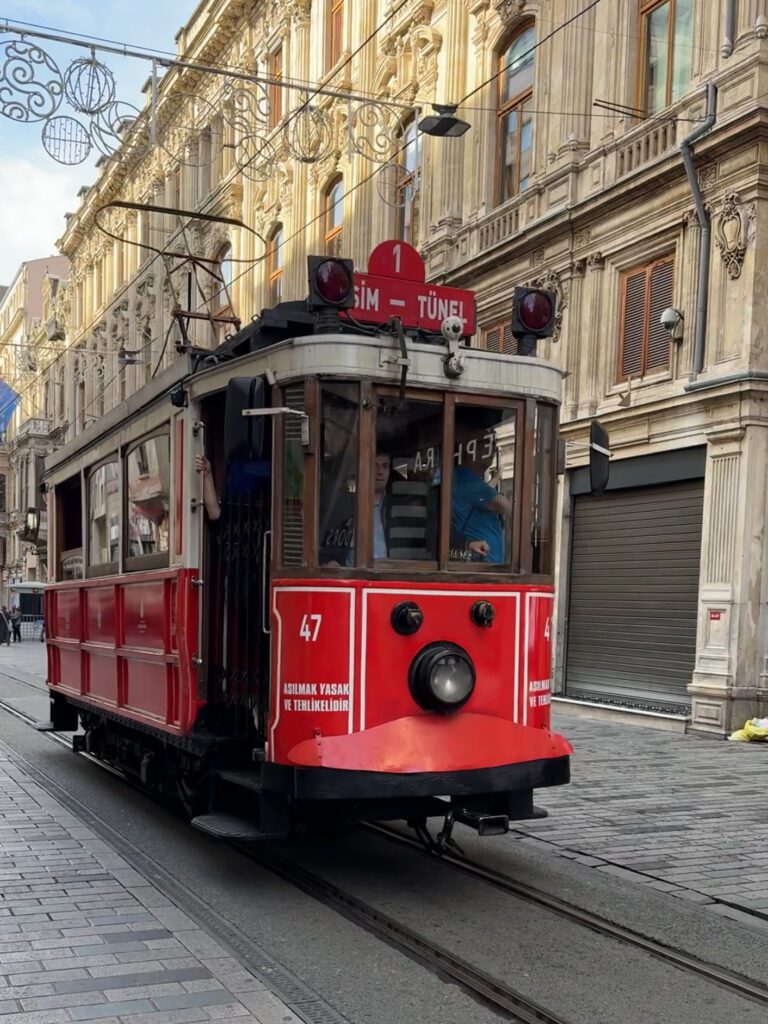
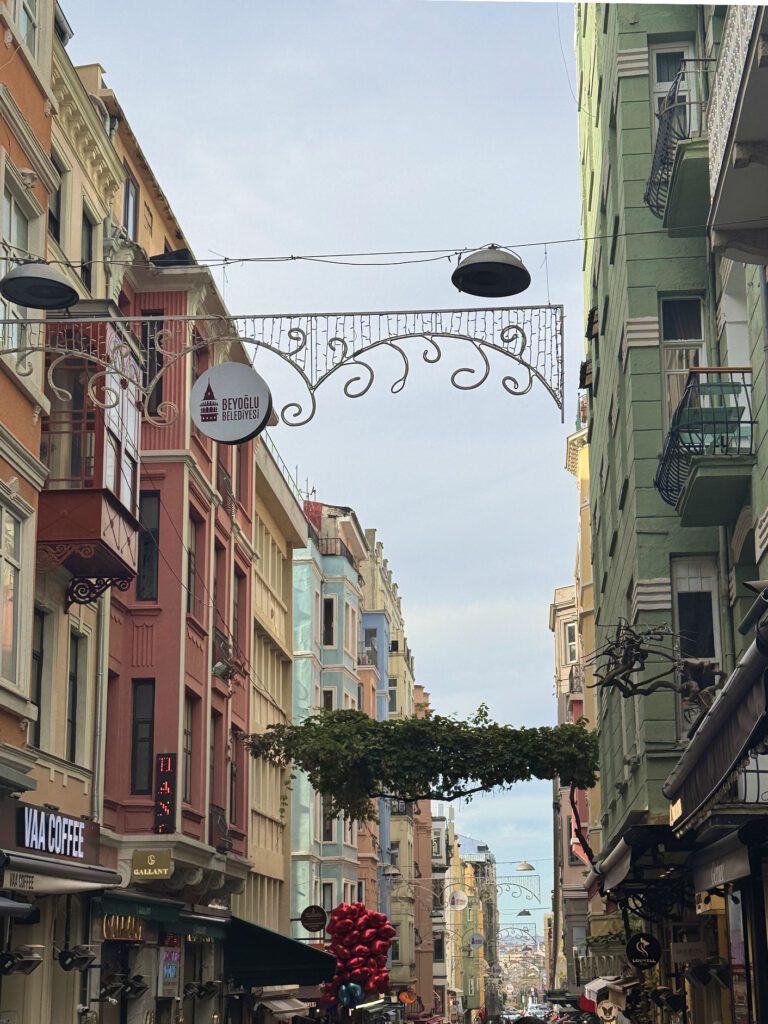
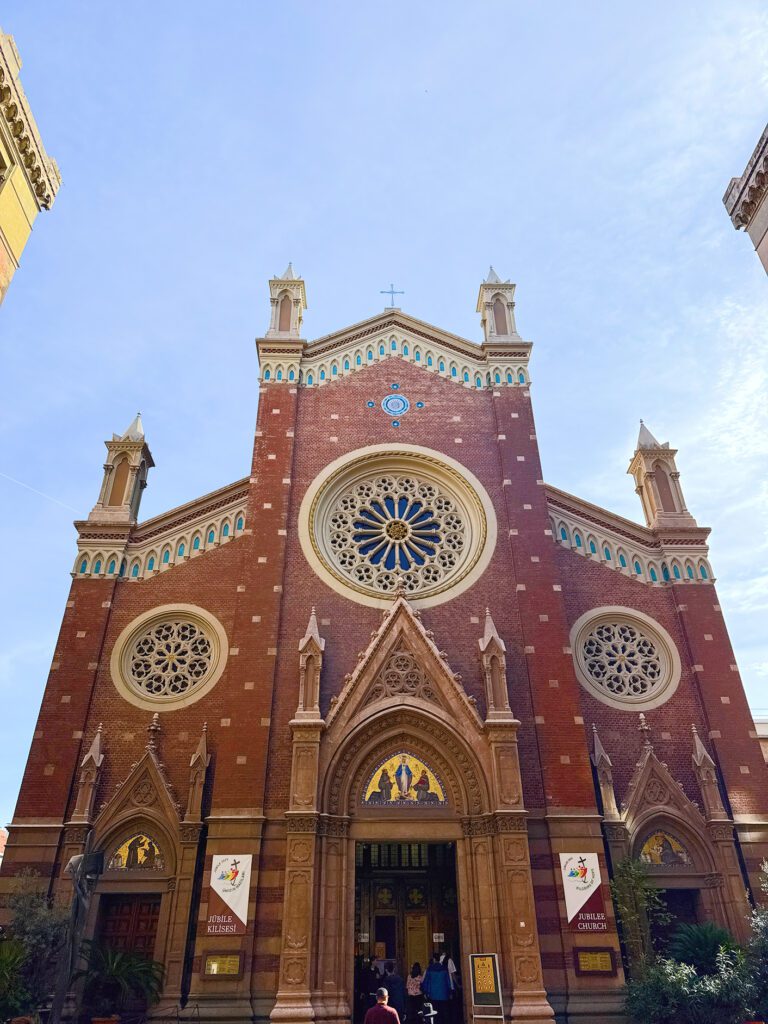
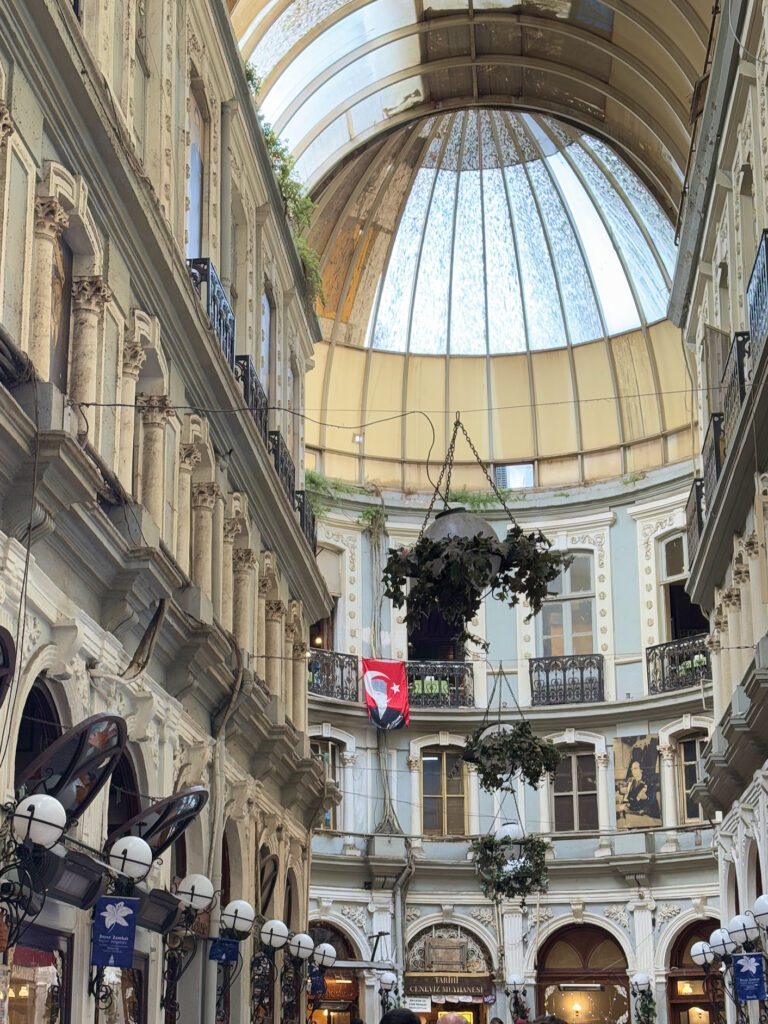
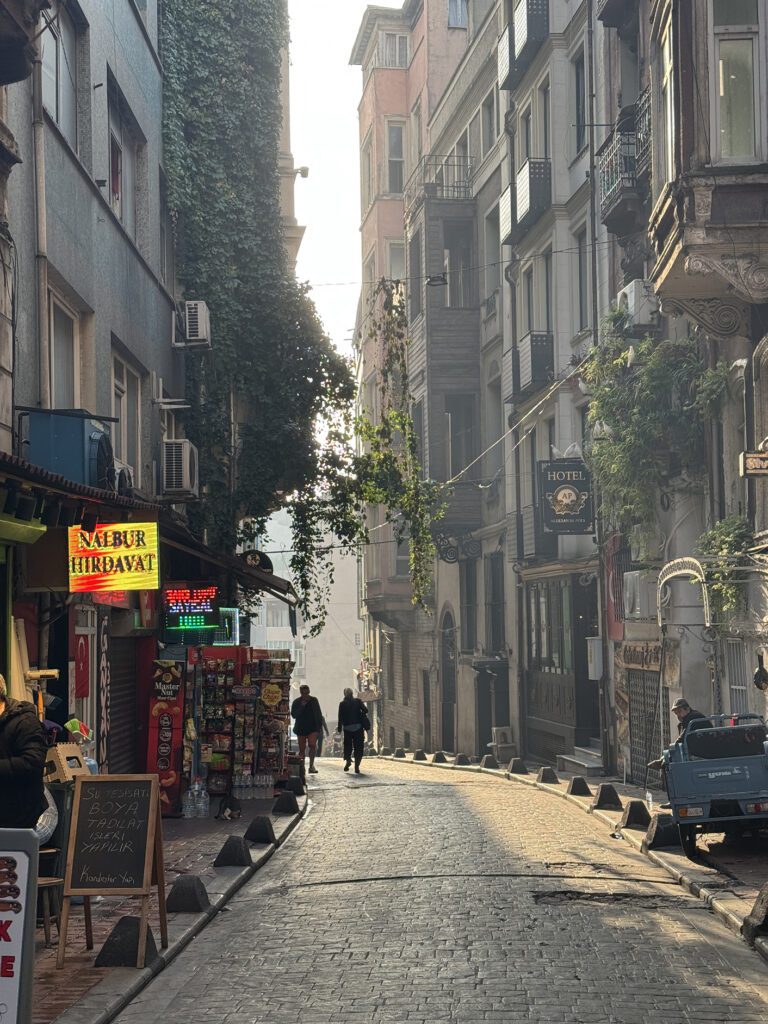
As I walked down Istiklal for the first time, I was honestly surprised by how elegant the buildings looked. The facades and architecture felt more like a European boulevard than what I expected from Istanbul. My biggest surprise, though, was stumbling upon a Catholic church completely by accident while wandering the side streets.
Later I found out why it feels so different. In the late Ottoman period, Istiklal was the cosmopolitan heart of the city. European embassies and businesses were based here, and the area was home to European expats and the Turkish elite. Many of the buildings were designed by Italian and French architects, and even 19th-century travelers called this place “the Paris of the East.”
Because it’s such an iconic spot, Istiklal is packed every day, both with tourists and locals. I really recommend coming here in the first half of the day. After around 11–12 a.m. the crowds grow fast, and at some point you’re just weaving through people instead of enjoying your walk.
💵Money tip: Istiklal is one of the good places to exchange a small amount of money at a decent rate. Walk along the street, check a few exchange offices and compare the numbers, then change just what you need for the first day or two.
If you’re planning to exchange a larger amount, it’s usually better to wait and do it later at the Grand Bazaar, where the rates are often even more attractive (yes, weirdly, the tourist market with overpriced everything else has some of the best exchange rates)
🕌Mosque tip: If you’re planning to visit mosques during your trip, Istiklal is also a great place to buy a scarf in advance. As you walk, you’ll see a few shops selling simple, nice-looking scarves in the range of about 200–500 lira — perfect to keep in your bag and not stress about dress codes later
Kamondo Stairs Istanbul: The Prettiest Photo Stop Near Karaköy
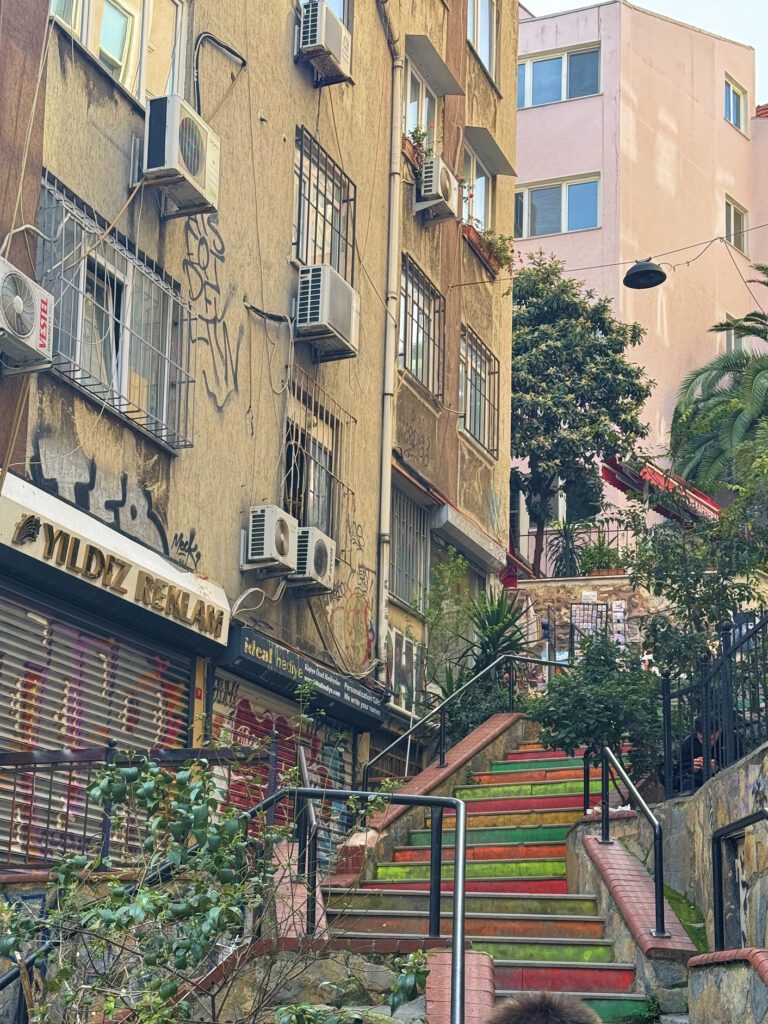
On your way down, you can also make a quick stop at the famous photo spot Kamondo Stairs, built in the 1850s by the wealthy Kamondo banking family who lived in this neighborhood. These spiral stairs in a neo-baroque style have become a little Instagram star, and yes, they’re just as photogenic in real life.
In general, Istanbul has a lot of stairs. Sometimes you really do have to climb your way through the city, but that’s part of what makes the urban landscape so interesting. Some staircases are architectural pieces on their own, like Kamondo, while others are turned into street art by locals, painted in bright colors and turned into small pockets of charm along the way.
Galata Tower Area: Tower, Cheesecake & Cute Side Streets
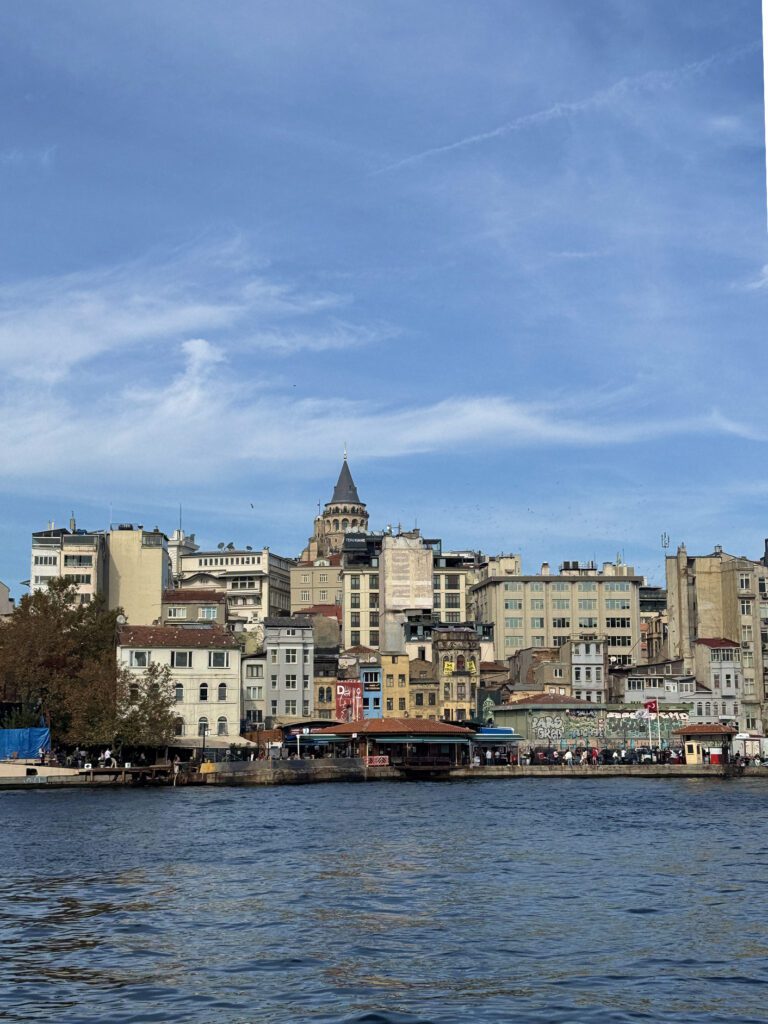
As you keep walking downhill, you’ll eventually find yourself standing in front of the famous medieval Galata Tower. Back in the day, it was the highest point among the fortification walls that surrounded the Genoese colony of Constantinople. Most of those walls were demolished in the 19th century as the city expanded, but the tower survived and kept getting reused for different purposes over the years, at one point it even served as a prison, before finally becoming the museum it is today.
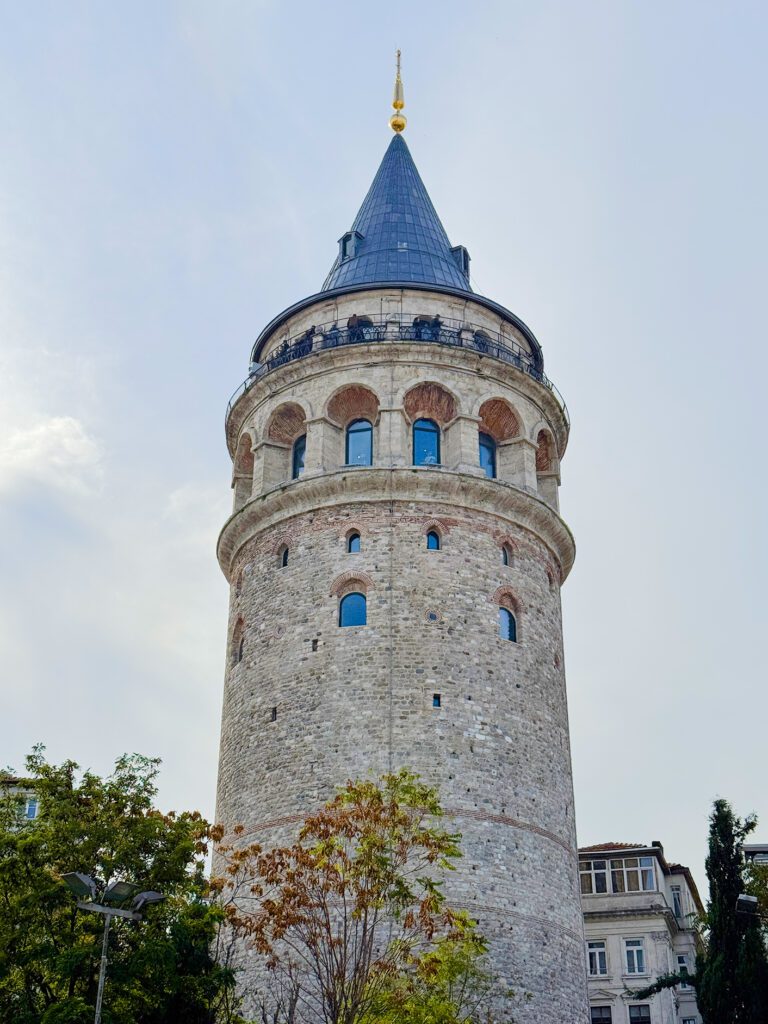
For most visitors, the main reason to go up Galata Tower is the panoramic view of old Istanbul from the observation deck, plus a romantic local legend: if two people in love visit the tower together for the first time in their lives, they’re destined to get married.
From a tourist point of view, I wouldn’t call going up Galata Tower an “absolute must.” Honestly, for me the ticket price feels a bit steep, especially when you can admire the tower beautifully from the outside, and you can get almost the same views from nearby rooftop cafés and restaurants on the upper floors of the surrounding buildings.
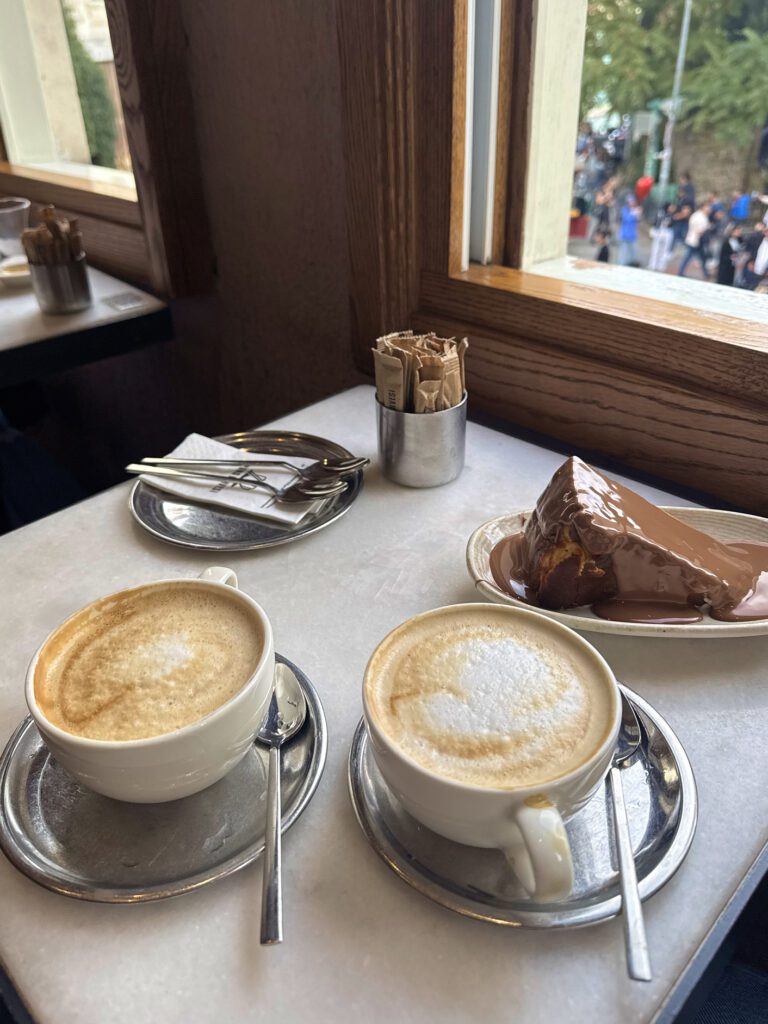
What is absolutely worth your money, though, is the legendary San Sebastian cheesecake. You can find it in many cafés all over Istanbul (and if you want to eat it quietly and cheaply, I’d go to a less touristy café somewhere further away), but the “classic” thing to do is to try it at one of the cafés near the tower. If it’s not peak season and you manage to get a table, I highly recommend sitting by the window with a slice of cheesecake and a view of this fairy-tale-looking tower. I got mine at Milota — the service was a little slow, but the taste totally made up for it, and the atmosphere was exactly what I was hoping for.
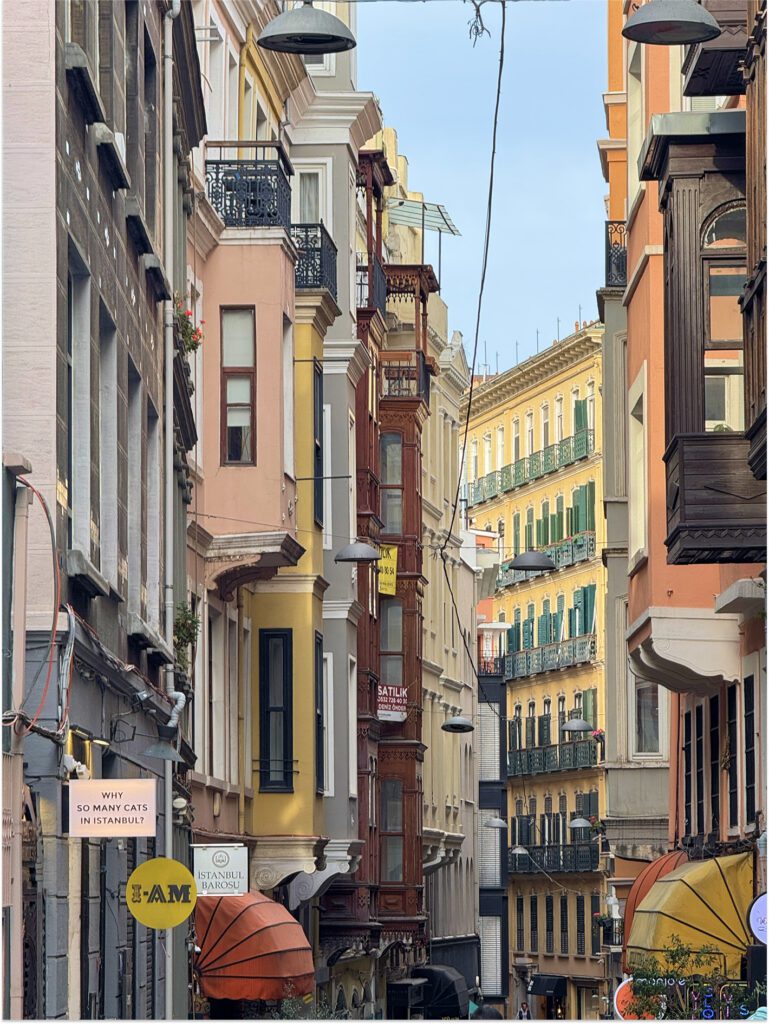
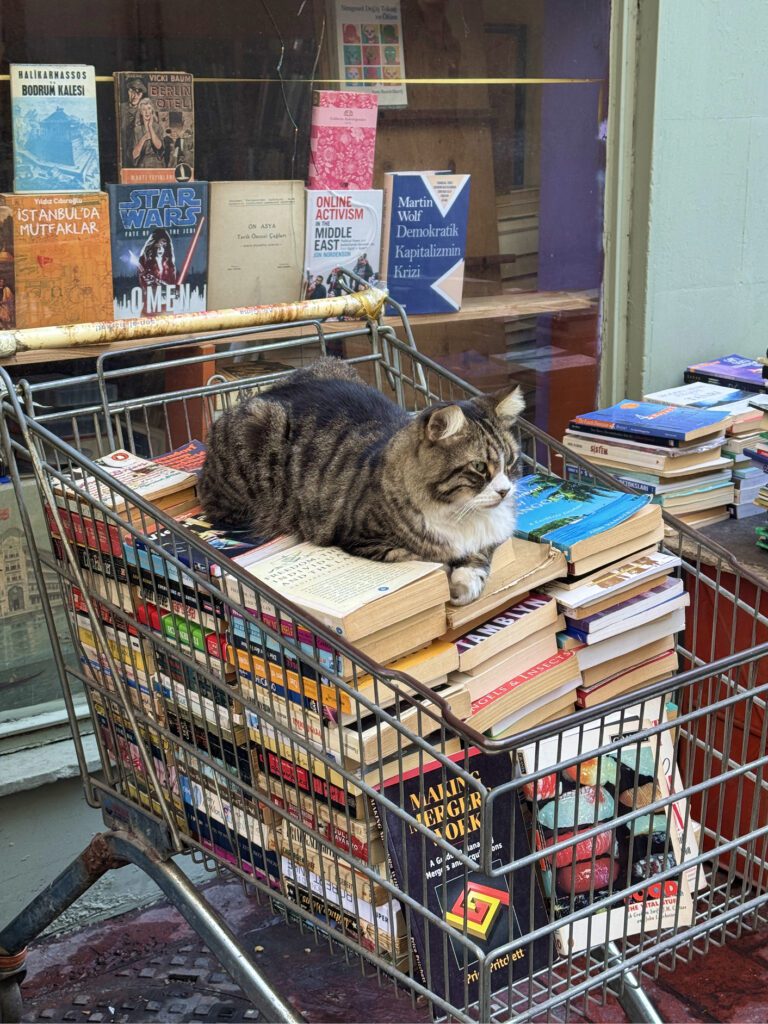
If you’re into hipster boutiques and vintage showrooms, don’t miss the little streets right next to the tower: Tatar Beyi Sokak and Serdar-ı Ekrem Caddesi It’s a great spot to poke around small shops, flip through racks of clothes and discover random little treasures.
Oh, and one more tiny gem in this area: there’s a small, adorable free museum dedicated to Turkish cats nearby. If you’re a cat person (or just mildly obsessed, like me), it’s definitely worth a quick visit.
📍Galata Tower Essentials:
Opening hours: 8:30 AM – 11:00 PM (Last entry 10:00 PM)
Duration: Most people spend 30–60 minutes
Price: €30
Galata Bridge in Istanbul: What to Do and Eat
After exploring the tower area, keep walking downhill towards the water and head to Galata Bridge, which connects you to the historical part of Istanbul. A lot of people think they’re crossing over to the Asian side here, but in reality you’re still very much on the European side, just crossing the inlet that separates two parts of it.
Galata Bridge isn’t just a pretty spot for tourists. It’s also a favourite place for local fishermen. No matter the season, you’ll see them lined up along the railings, calmly casting their lines, chatting with each other, sipping tea from tiny glasses and occasionally pulling a fish out of the water like it’s the most normal thing in the world. It gives the bridge this relaxed, everyday rhythm that’s fun to just stand and watch for a few minutes.
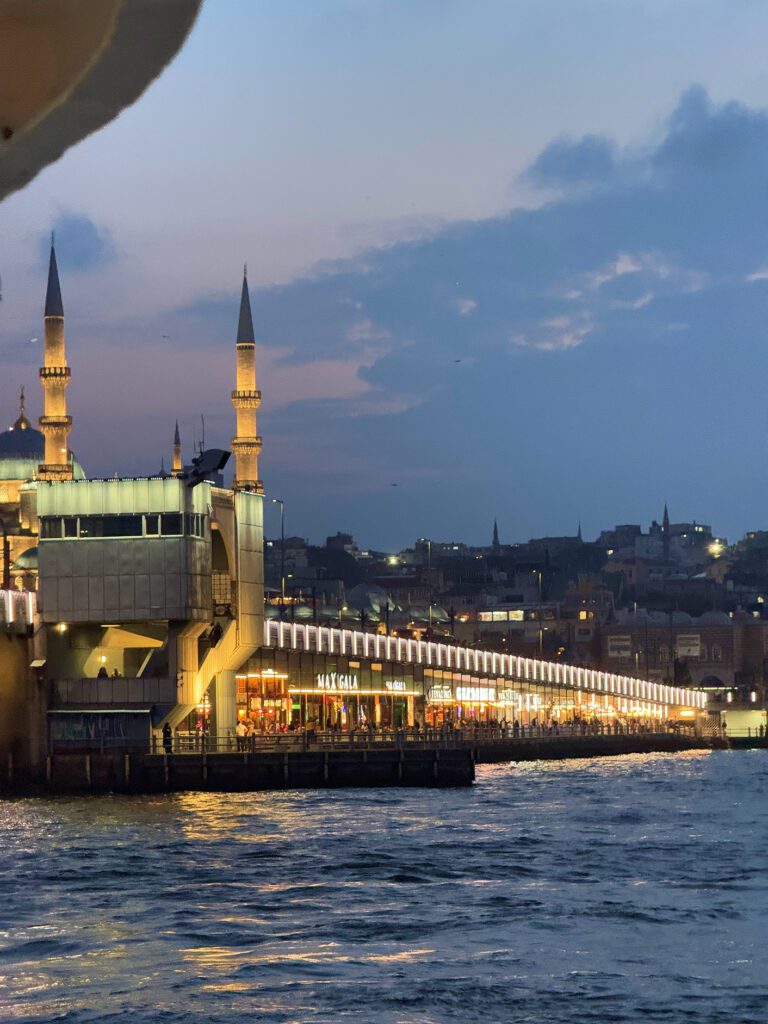
The bridge itself has two levels. If you walk along the lower level, you’ll find a row of restaurants and cafés, most of them serving fresh fish and seafood. This is a classic area to try balık ekmek (the famous fish sandwich in bread or flatbread) and midye dolma (mussels stuffed with rice), or to sit down properly for a full seafood dinner. Just remember: like in most very touristy spots, it’s worth asking about prices clearly in advance so you don’t end up with any “surprises” on the bill.
✨Viewpoint tip: This is a great spot for a crowd-free view and some cute photos. Walk to the middle of the bridge and look for the stairs that connect the upper and lower levels. Head down and you’ll get a gorgeous view towards Karaköy, with ferries and big ships passing by, without being squeezed into the main crowd
Day 2 – Dive Into Traditional Markets, Mosques & Local Neighborhoods
Istanbul Spice Market (Egyptian Bazaar): What to Expect + Shopping Tips
Now it’s time for something that feels very Istanbul: the markets. This is where the city suddenly becomes louder, brighter, more chaotic and somehow even more alive. The first one on your route will be the Egyptian Bazaar, also known as the Spice Market. It’s the second-largest covered market in the city after the Grand Bazaar, but easily number one when it comes to colours and smells.
The Egyptian Bazaar was built back in 1660 and was originally called the “New Bazaar”. Later it was renamed after Egypt, because it was funded by the taxes and income coming from the Ottoman province there. The building itself is part of the complex of the nearby New Mosque, and even today the rent from the stalls helps cover the upkeep of the mosque.
📷Photo tip: Not every seller loves being photographed, and some even put up “no photos” signs right on their stalls. To keep things smooth (and avoid an awkward moment), stick to wider, more general shots of the market, or simply smile and ask if they’re okay with a quick photo of their stand.
Originally this place focused almost entirely on spices, just like the name suggests. These days it’s much more mixed: along with spices you’ll find tea, Turkish delight, nuts, dried fruits, coffee and all kinds of classic souvenir stuff. In many ways it now feels quite similar to the Grand Bazaar, just more compact and, I’d say, more fragrant.
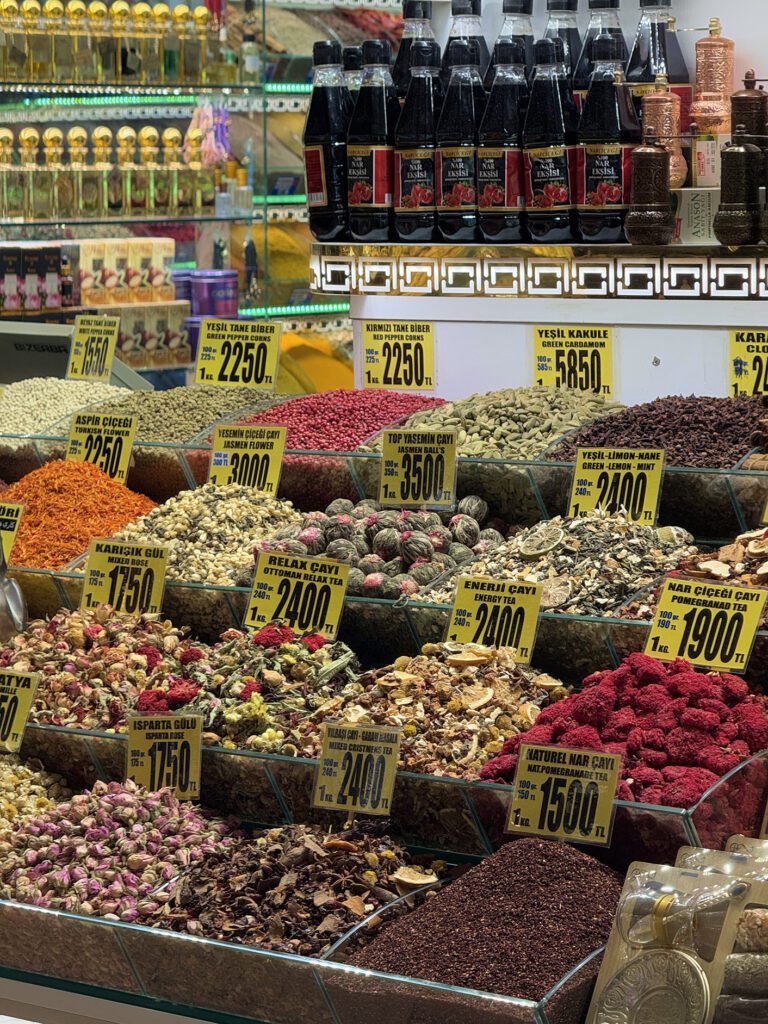
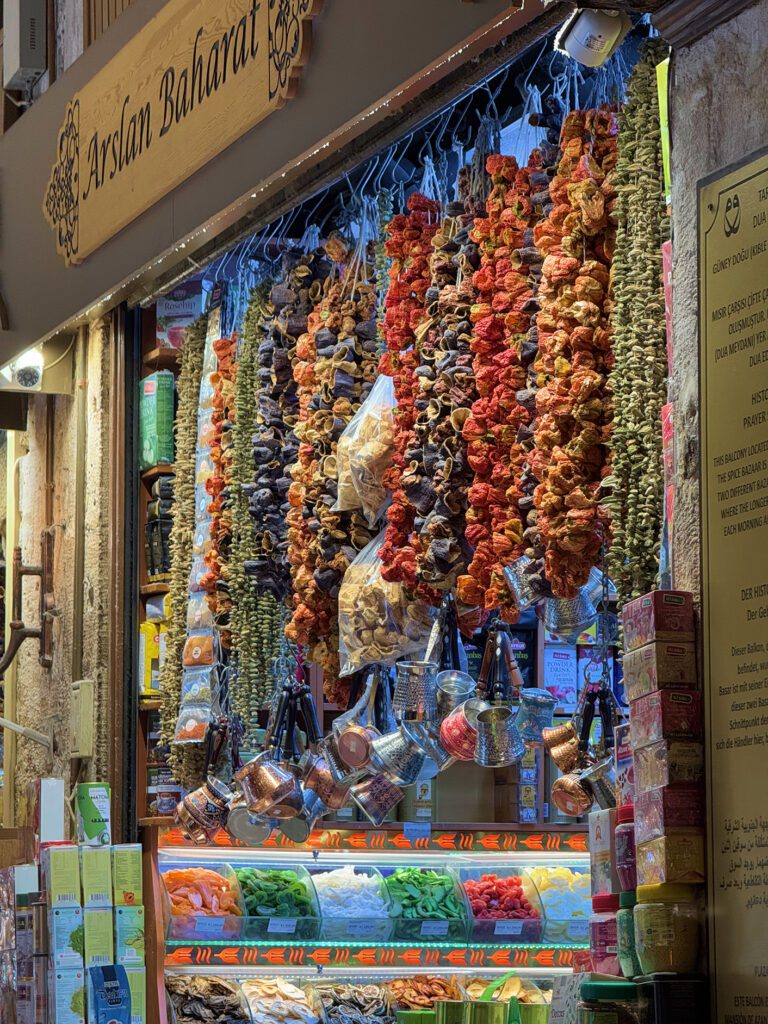
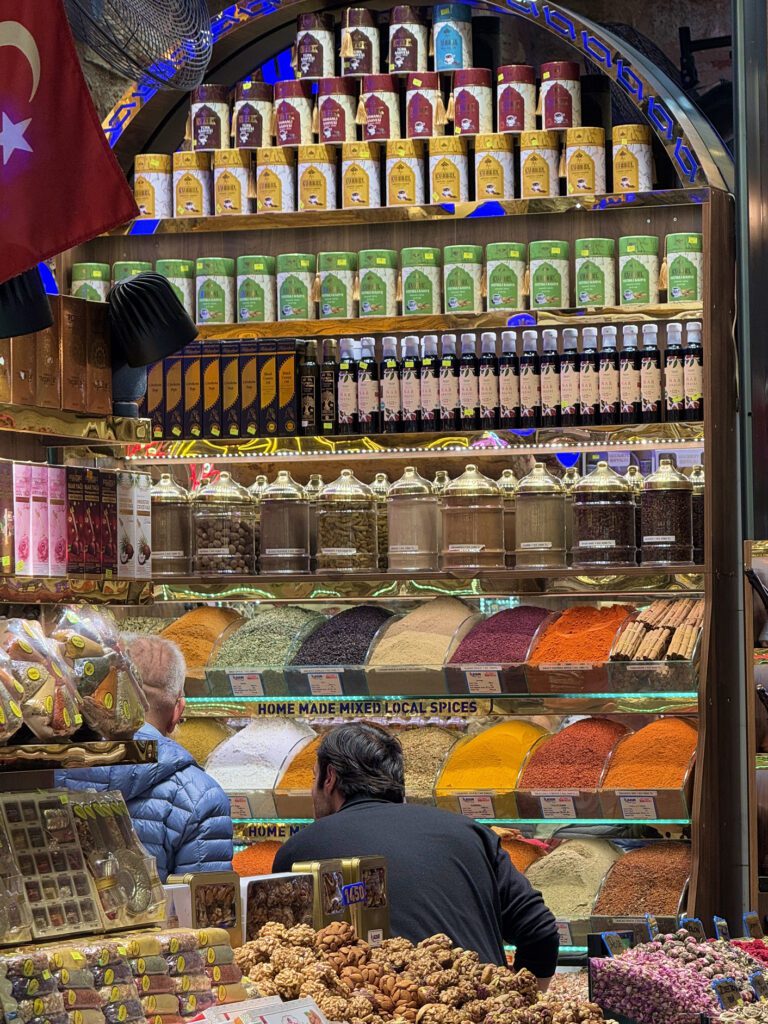
In general, this market isn’t the cheapest place to shop. Just like the Grand Bazaar, it’s more aimed at tourists than locals. I still think it’s worth visiting for the atmosphere alone – the noise, the smells, the mix of languages around you, but later I’ll tell you where it actually makes more sense to do your real shopping.
If you do decide to buy something here, I recommend choosing stalls where prices are clearly written and paying attention to quantities. When you’re buying things by weight like tea, spices or sweets, some sellers might “accidentally” pour in twice as much as you asked for and then smile sweetly while the total jumps up.
🛍️ Shopping tip: Just like at any Turkish bazaar, the price for the exact same thing can swing wildly from stall to stall (sometimes literally in the same row), and the better deals are usually not right at the entrance but deeper inside, so it’s worth comparing a few stands, trying a little friendly bargaining, or simply asking for a better price if you’re buying a couple of things at once
Süleymaniye Mosque Istanbul: A Peaceful Stop
After the busy, noisy bazaar, it’s the perfect time to escape somewhere calm, and Suleymaniye Mosque is exactly that kind of place.
Istanbul was the first city where I visited so many mosques, and I was honestly surprised by how different they feel compared to European Catholic or Orthodox churches. Yes, there are rules: modest clothing, women cover their hair, and everyone takes off their shoes at the entrance (you can carry them in a bag, or just leave them by the door like the locals do). But despite these rules, the atmosphere inside feels surprisingly relaxed.
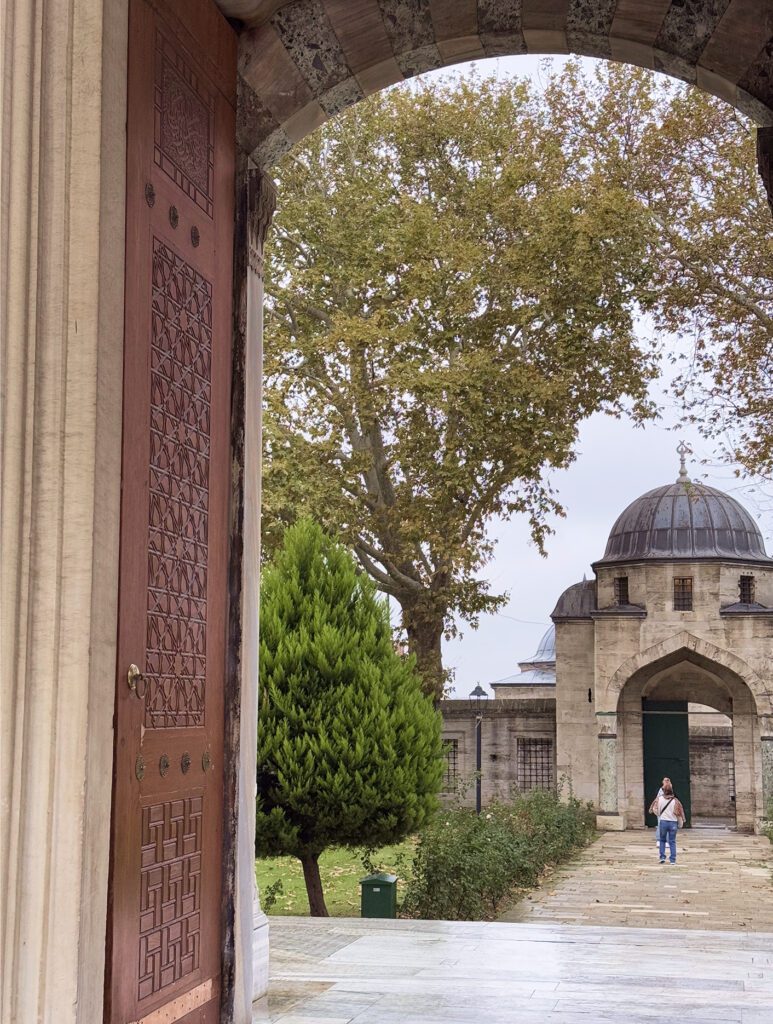
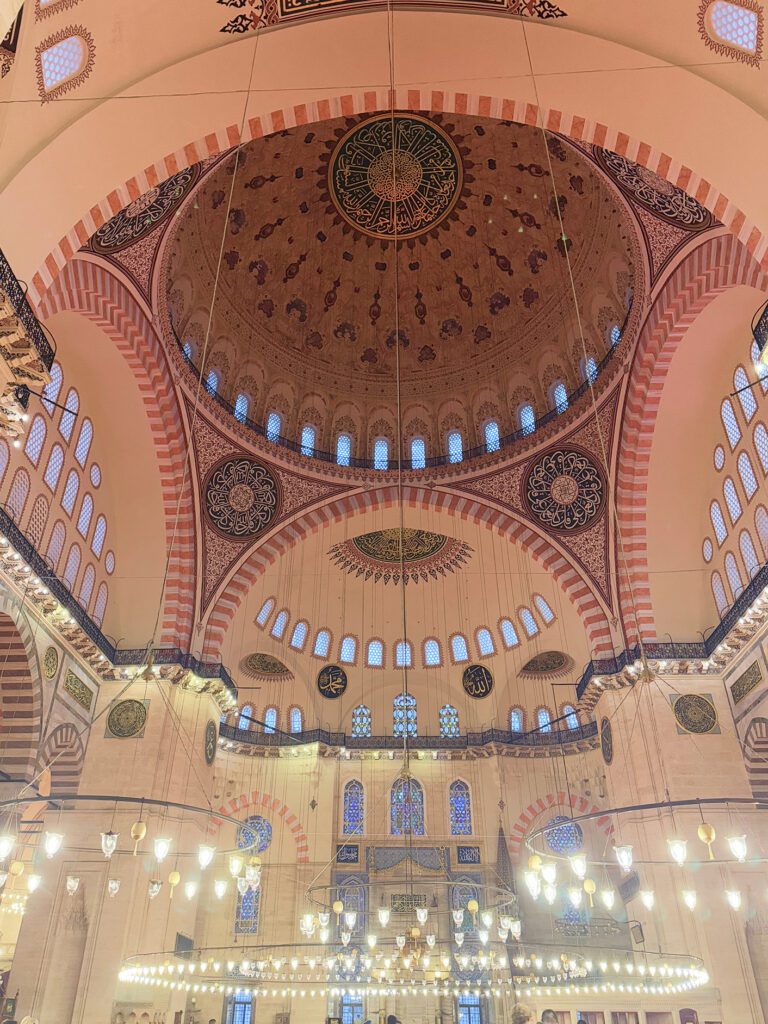
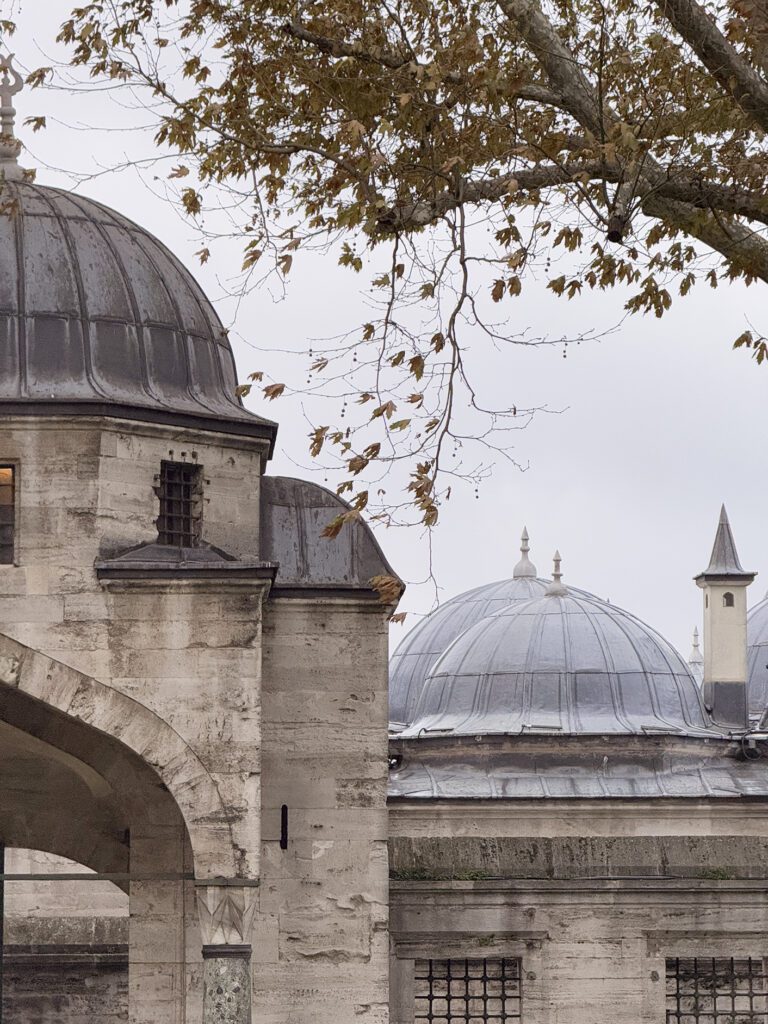
Once you step in, the noise of the city disappears. The entire floor is covered with soft carpets, carefully cleaned and looked after, and you can actually sit down, rest and just be there for a while. Look up, and you’ll see beautiful patterns and calligraphy decorating the domes and walls, it’s easy to lose track of time just staring at the details.
Suleymaniye Mosque was completed in 1557 and built in honour of Suleiman the Magnificent, the longest-reigning sultan of the Ottoman Empire. Today it’s one of Istanbul’s most famous landmarks and is considered a masterpiece of Ottoman architecture. One of its main features is its size, it’s the largest Ottoman-era mosque in the city, but what stays with you is the inside — full of space, light and elegant decoration rather than heavy, overwhelming details.
Within the mosque complex you’ll also find the tombs of Suleiman the Magnificent and his wife Hürrem Sultan, better known to many people (and fans of Turkish series) as Roxelana.
🗓️ Planning tip: Entry is completely free, but you do need to plan around prayer times. During prayers, parts of the mosque may be closed to visitors or you might be asked to wait outside for a while, so it’s best to check the approximate times in advance and visit between them
Grand Bazaar Istanbul: Good for Shopping or Just for the Atmosphere?
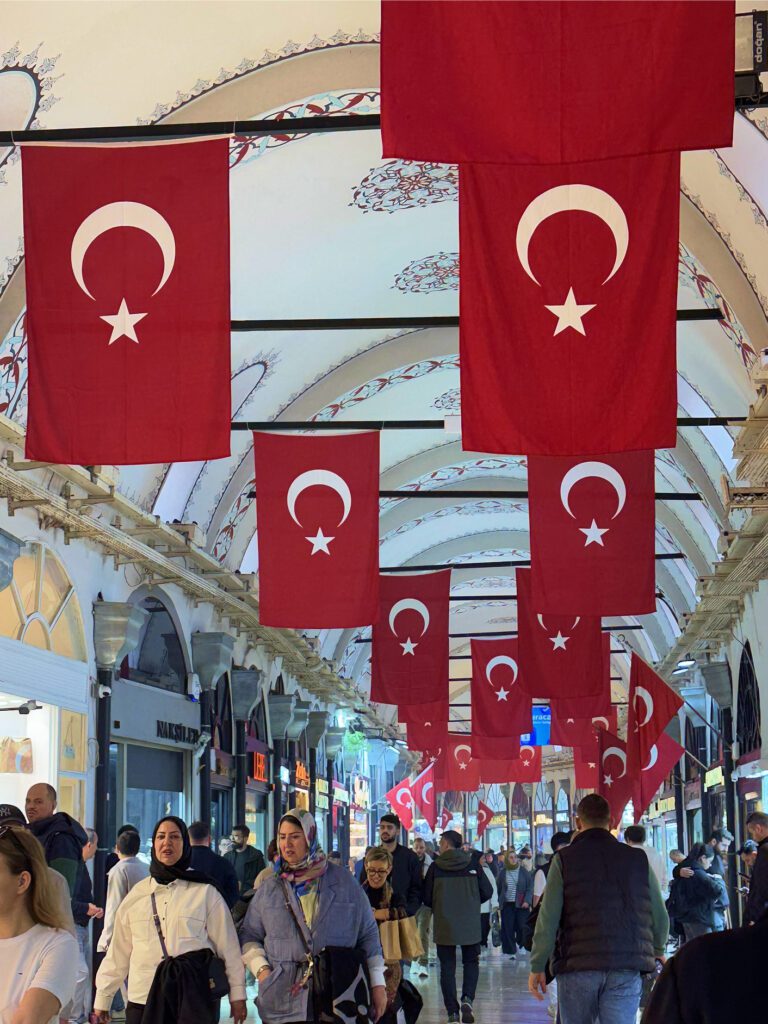
Next stop — the Grand Bazaar, which honestly feels like a small city hidden inside the big city of Istanbul.
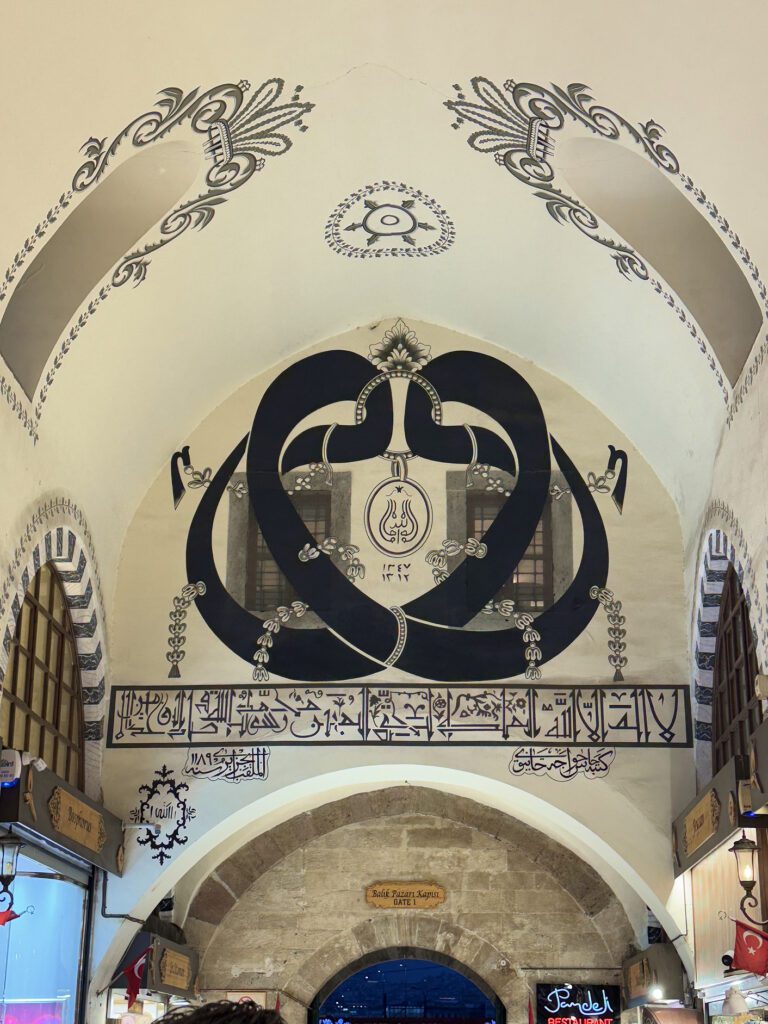
Construction of the bazaar started not long after the Ottomans conquered Constantinople, as part of developing the new capital. The first foundations were laid around 1455, and later, during the reign of Suleiman the Magnificent in the 16th century, it was expanded and grew into something much closer to what you see today. Now it is considered one of the world’s first “shopping malls” and one of the largest covered markets on the planet, with around 61 streets under its roof. It even used to rank as the most visited attraction in the world, so be prepared for crowds.
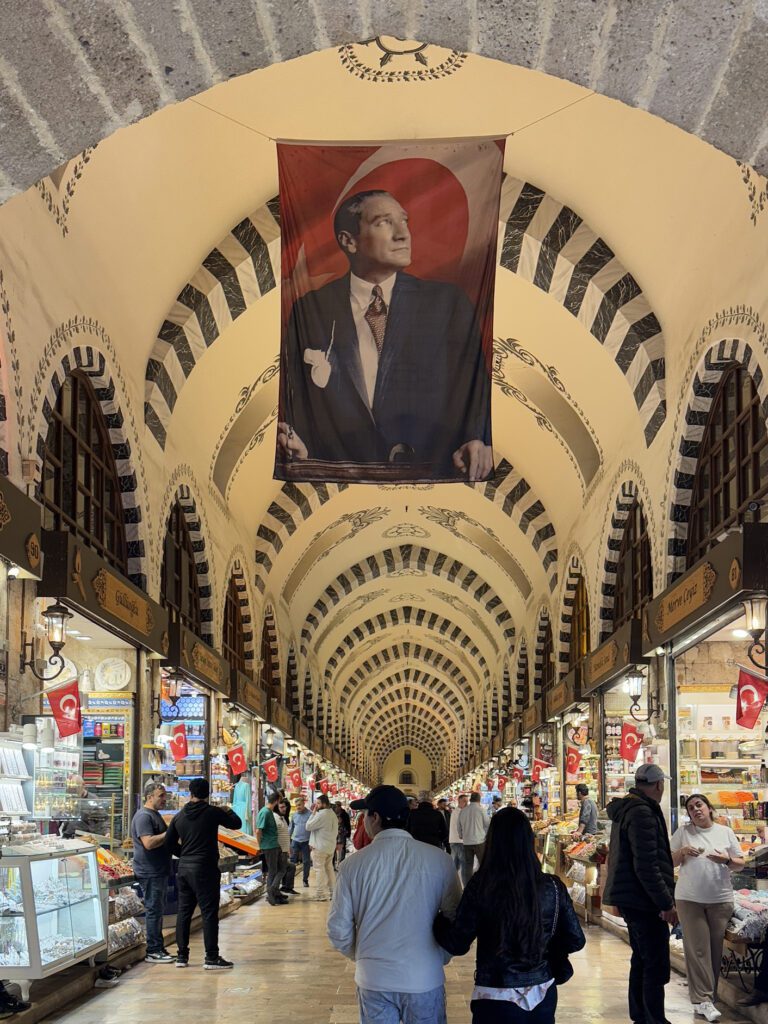
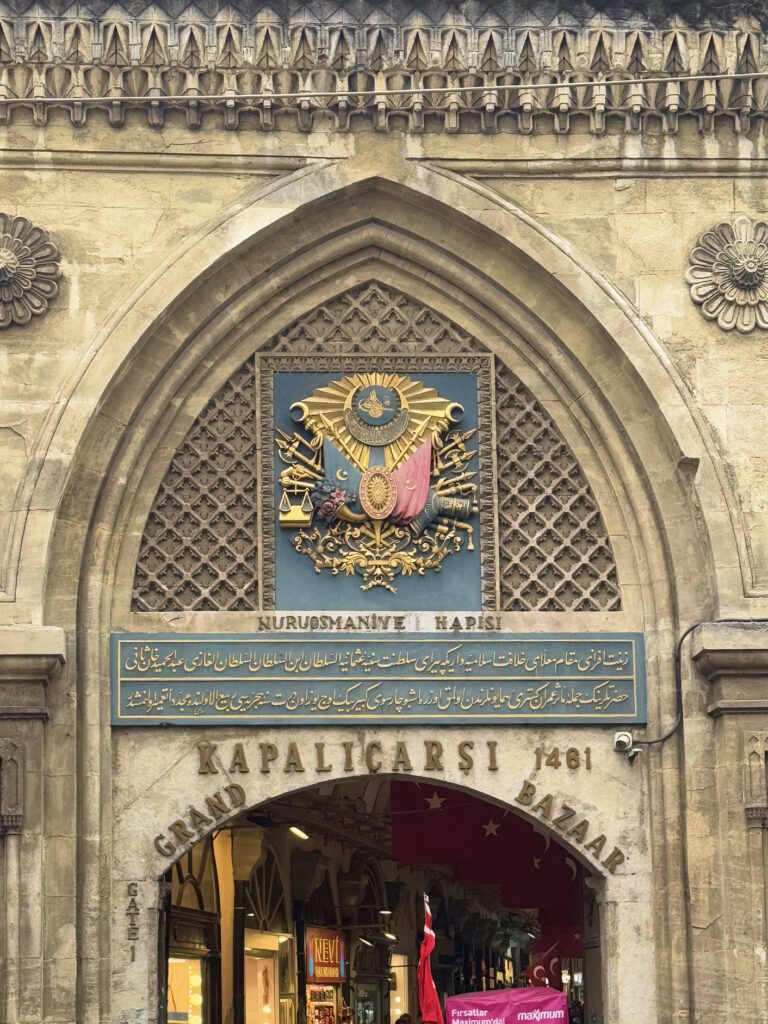
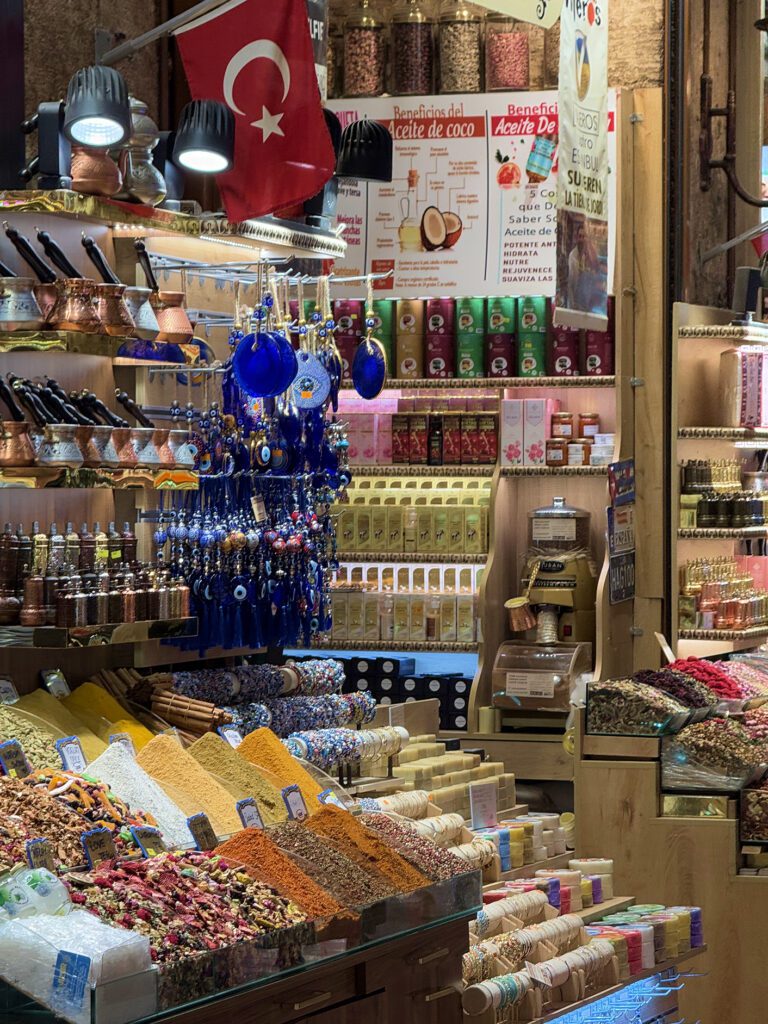
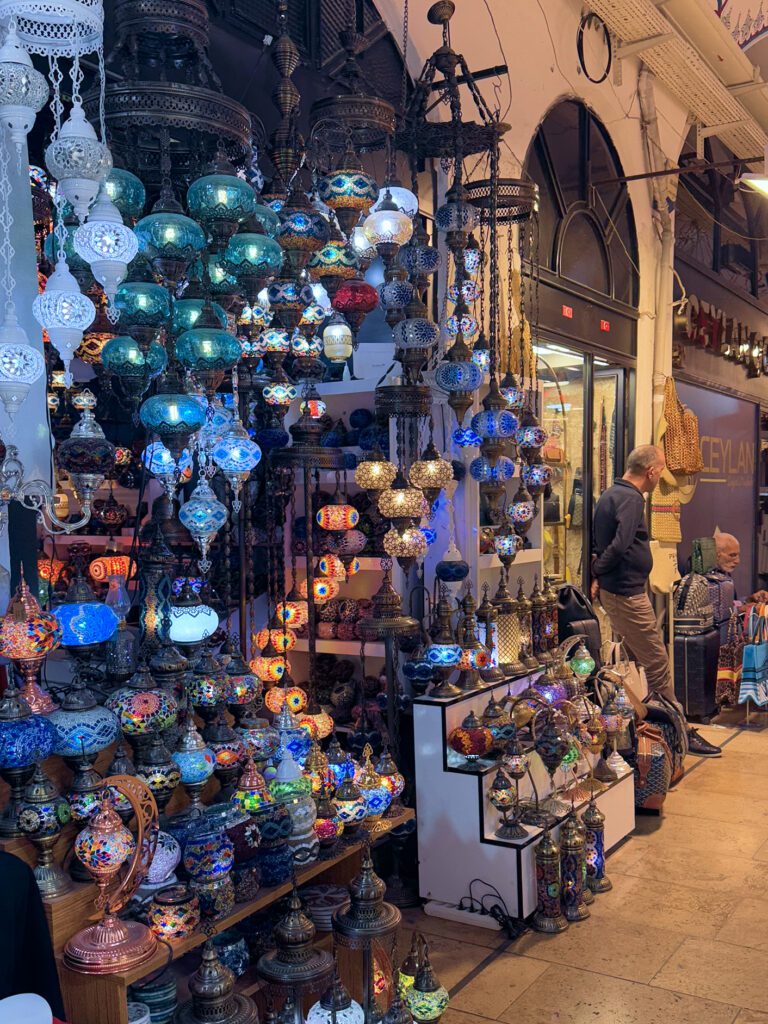
Inside, it feels like an endless maze of corridors painted with beautiful Turkish patterns. You can find almost anything here: classic tourist souvenirs like magnets and miniatures of mosques and Galata Tower, those colourful “magic” lamps with full-on oriental vibes, ceramics and dishes covered in traditional designs, textiles of all kinds, plus sweets, tea and spices.
The downside is the same story as at the Egyptian Bazaar. Prices are often inflated, and two shops can sell the exact same thing for very different amounts. At the entrance I once saw a gorgeous “hand-painted” poster of Istanbul. The seller casually told me it was 50 euros. Later, deeper inside the bazaar, I spotted the exact same poster, realised it was actually printed, not painted, and there the price was 30 euros.
You can absolutely buy something here, just be selective. I really recommend looking for stalls where prices are clearly written. I only found a handful like that, but at least you know what you are dealing with. If you prefer to save money, walk all the way through to the other side of the bazaar and step out into the open streets. There you will see less fancy shops, more locals and much better prices. This is where it starts to feel like a more authentic everyday market. If you wander deeper, you will find lots of interesting things at sane prices, plus simple local fast food spots where you can grab fresh juice or some version of shawarma and give your feet a break.
And here comes the ironic part. Even though almost everything inside the Grand Bazaar is overpriced, it is actually one of the best places in the city to exchange money. The currency exchange rates here are usually very good, so you can safely change your cash without feeling like you are being ripped off.
Nuruosmaniye Mosque: A Quiet Stop Next to the Grand Bazaar
After diving deep into bazaar chaos, you’ll probably want a break from the noise, and Nuruosmaniye Mosque is the perfect place for that.
The mosque was built in the 18th century and is known for its slightly European charm. It was designed by a Greek architect and became the first major Ottoman building in the new baroque style influenced by Europe. On top of that, it has one of the largest domes in Istanbul, so when you step inside, the space feels wide, bright and airy.
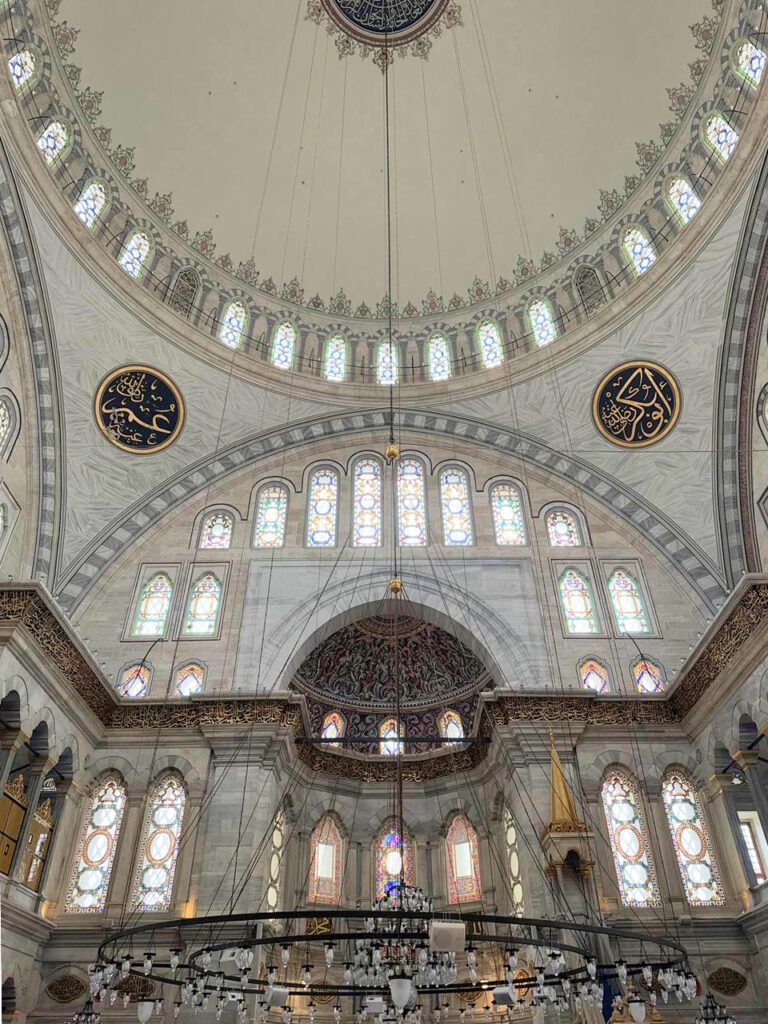
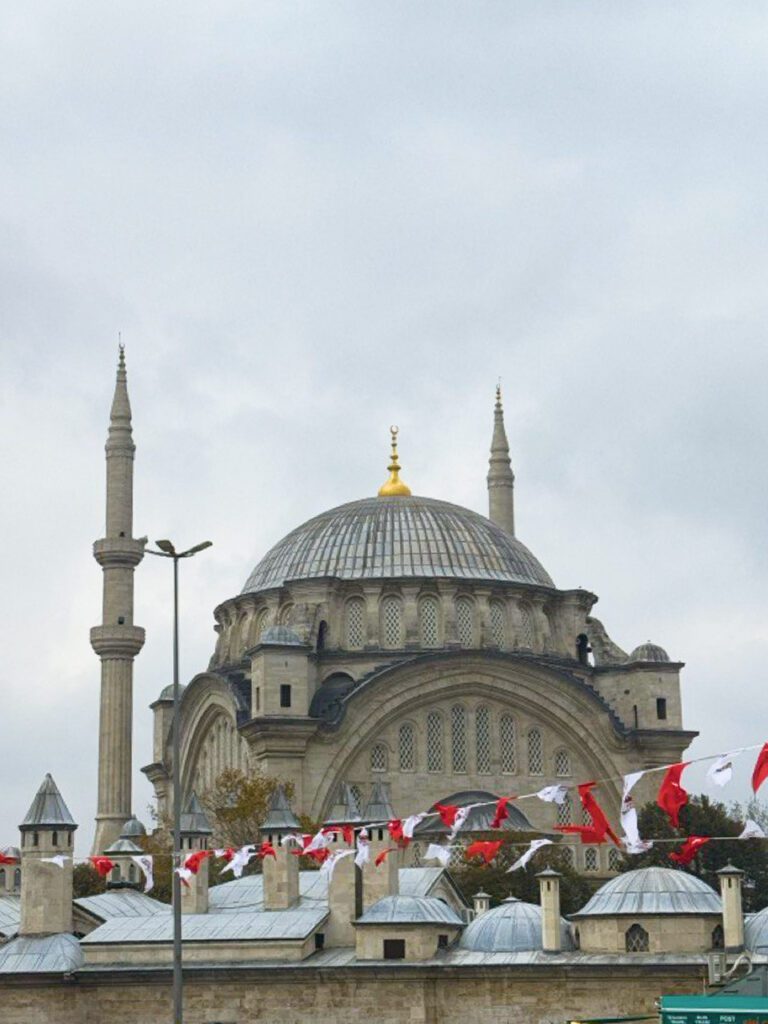
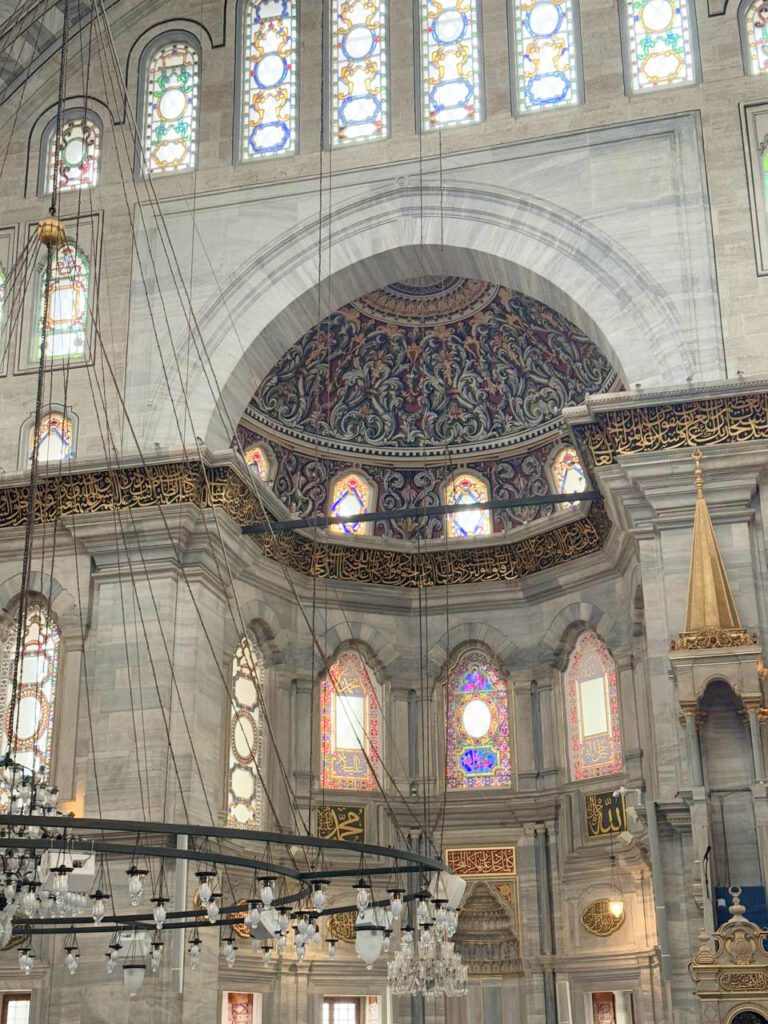
But the main reason I recommend visiting Nuruosmaniye isn’t just the architecture. There’s a small volunteer group based there, and talking to one of the volunteers turned out to be one of my favourite experiences in Istanbul.
You don’t need to book anything, just walk into the mosque. If it’s clear you’re a tourist, someone will most likely approach you first. In my case, a volunteer came over and asked if I was interested in learning more about Islam, the mosque itself, or had any questions. I asked her to tell me a bit about Turkish culture, religion and the meaning behind the mosque’s architecture and interior designs, and it turned into an incredibly interesting mini-lecture.
We sat together on the carpet for almost an hour, completely unhurried. She explained details of the calligraphy and patterns, talked about how religion fits into daily life in Turkey, and at the end she even gave me a small book about the religious history of Istanbul in my native language. You can also simply pick up brochures and little booklets in different languages there, they’re free.
So if you find yourself in this mosque, or any other where volunteers offer to talk, don’t miss the chance. Ask a few questions, or just say you’d love to hear general facts about the mosque, Islam or the history of Istanbul. It’s like getting your own personal guide, but with way more heart.
Balat Istanbul: Colorful Streets, Cafés & the Best Photo Spots
Head to one of the most colourful and photogenic neighbourhoods in Istanbul — Balat. Historically, this area has been home to a mix of cultures and communities: Jewish, Greek Orthodox and Armenian families lived here at different times, and you can still feel that layered history in the streets.
Balat looks completely different from everything you’ve seen so far. It’s all about narrow cobbled streets, bright wooden houses, steep hills and painted staircases. The vibe here is much more relaxed than in the busy tourist centres, so it’s a great place to slow down, wander without a plan and let yourself get lost between colourful facades, hidden courtyards and little glimpses of local everyday life.
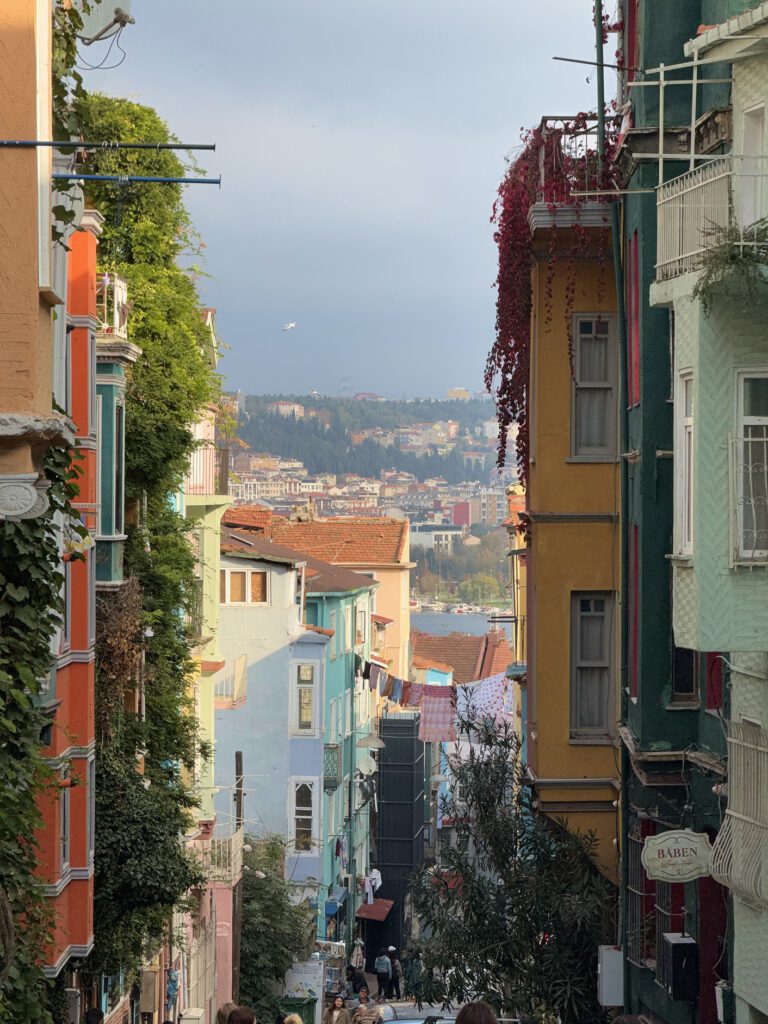
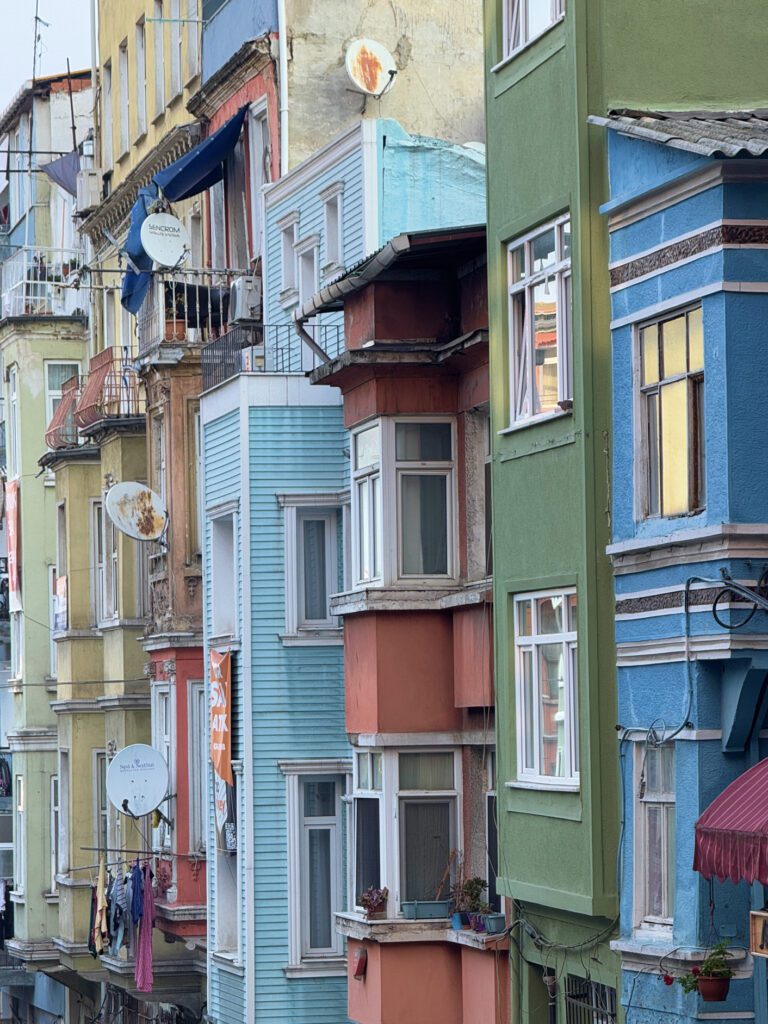
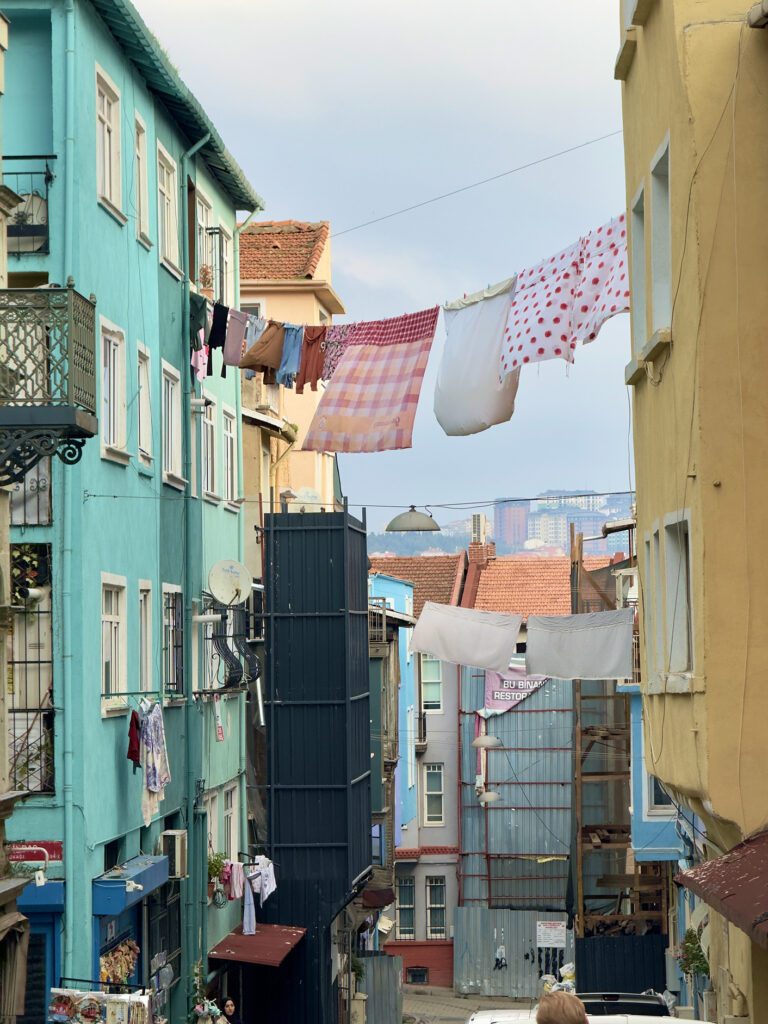
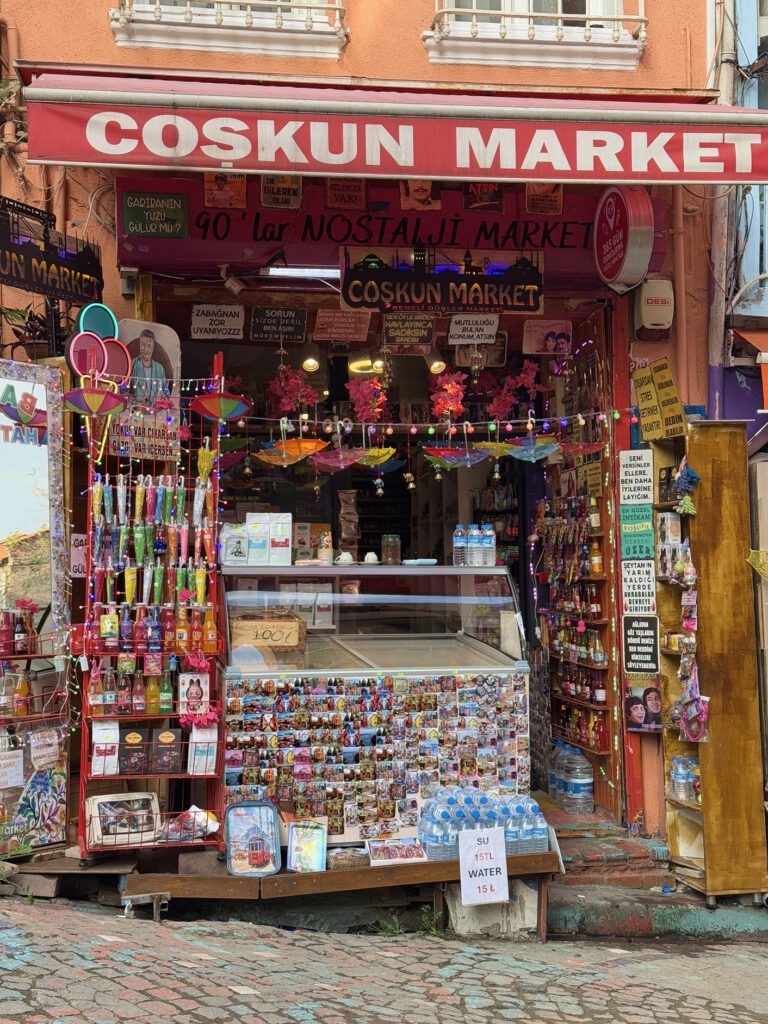
Grab a bite or take your time with a slow coffee at one of the local cafés. What I loved most is that some places actually cook right out on the street, so you can watch your food being made fresh in front of you while you sit and soak it all in.
As you explore, make sure to walk down Kiremit Street, where you’ll find one of the most famous clusters of colourful wooden houses lined up along a steep slope, it’s basically a postcard in real life.
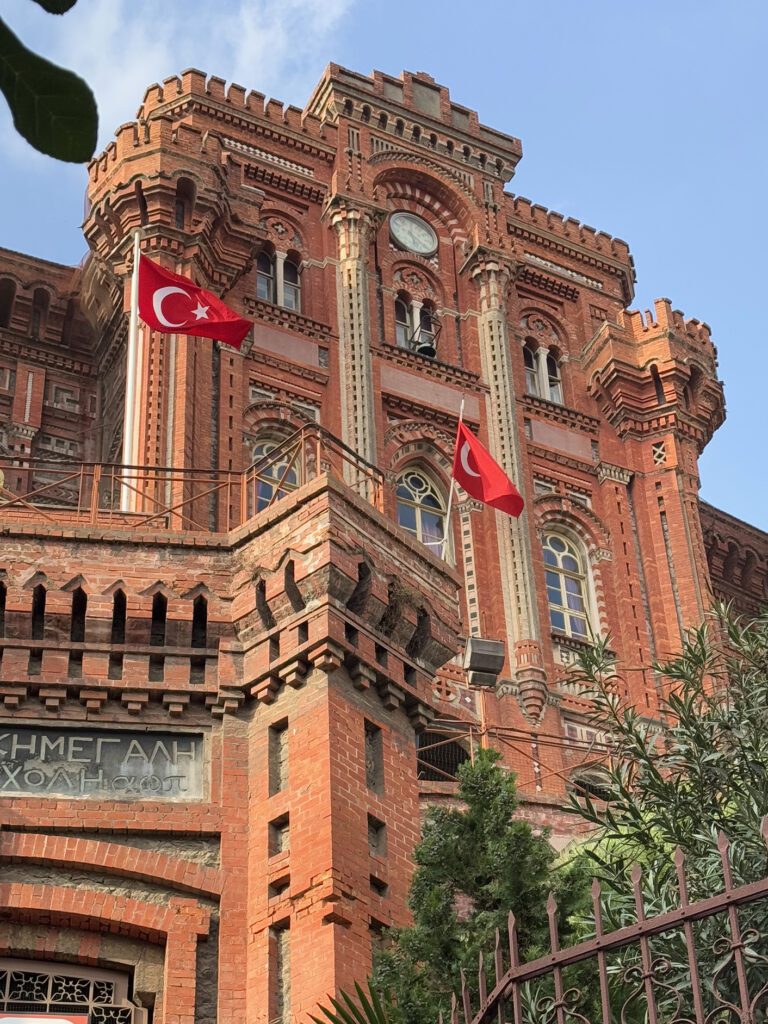
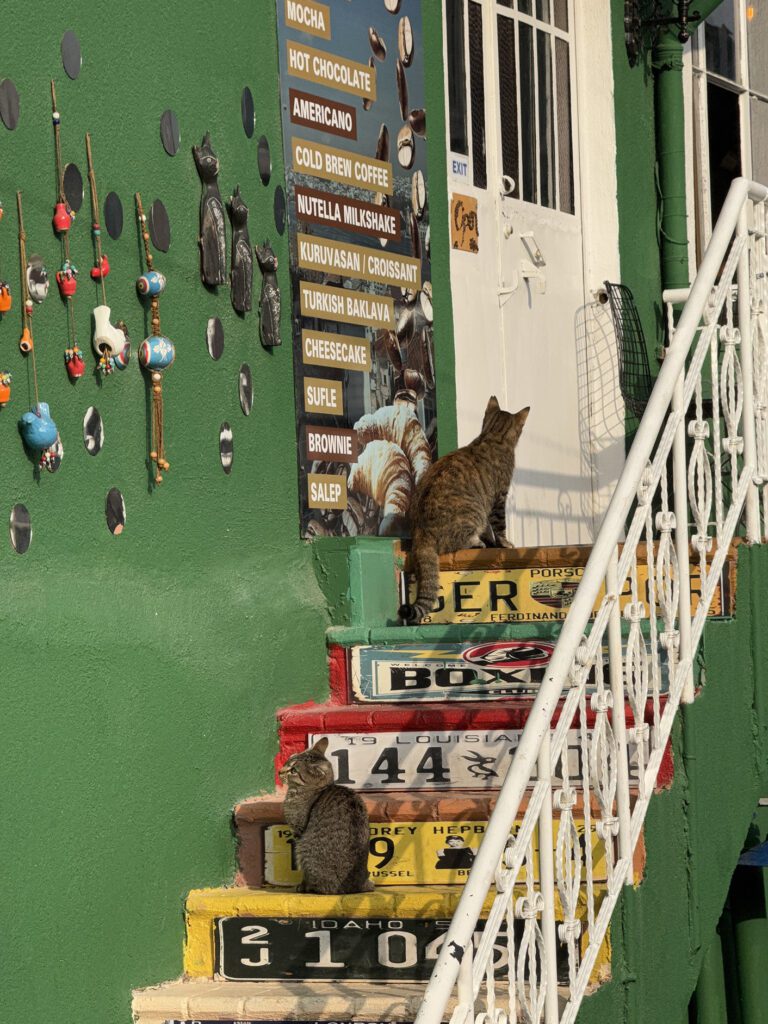
If you climb a bit higher up the hill, you’ll also see the Greek Orthodox Phanar College, a huge red-brick building that looks like a red castle hidden among the streets. You can only see it from the outside, but the architecture alone is worth the short detour.
Day 3 – Visit Istanbul’s Classic Historical Landmarks
Bosphorus Ferry Istanbul: The Best Cheap “Cruise” in the City
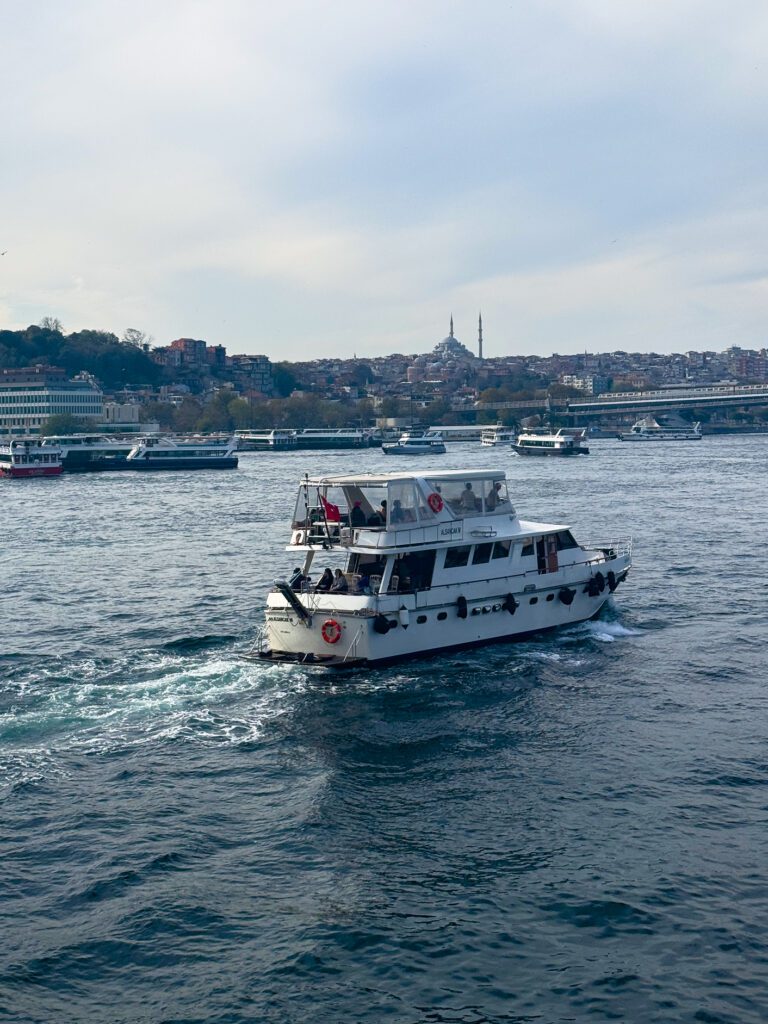
Start your next day with something that feels both super local and genuinely special as a visitor, a ferry ride across the Bosphorus. You can walk or take public transport to the nearest pier and just hop on, and if you’re in the mood for the longest ride, go all the way over to the Asian side.
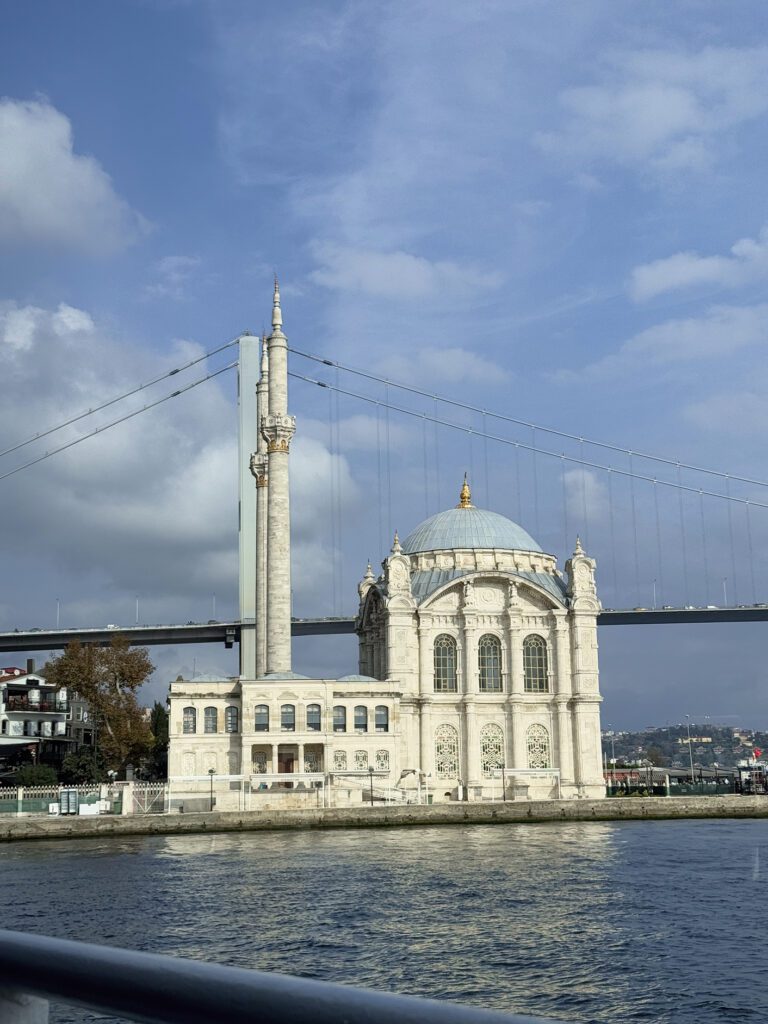
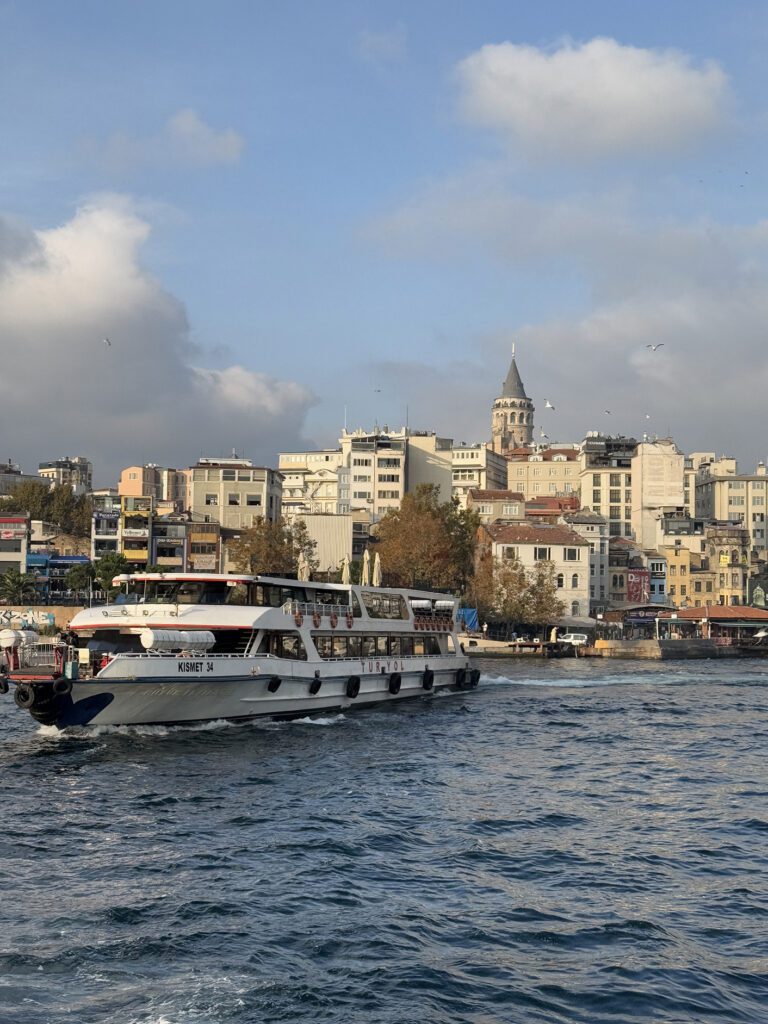
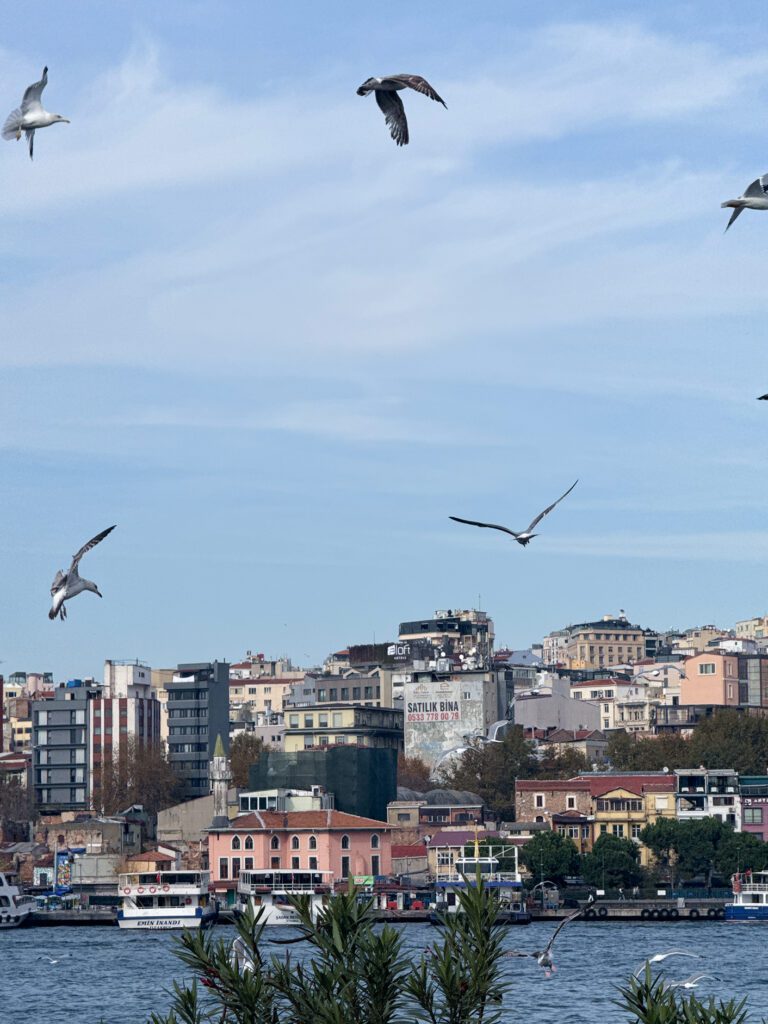
For locals, ferries are just a normal part of everyday life. For you, it’s basically a cheap mini-cruise with incredible views of the city. Ferries differ a bit from line to line, but most of them have a small kiosk where you can buy tea, coffee or a light snack and just enjoy the ride while seagulls race the boat.
⛴️Ferry tips:
Pick your spot – most ferries have two levels. The upper deck is open and not covered with glass, which is amazing for photos and views, but if your trip isn’t during the warmest time of year, it can get very windy once the ferry starts moving. If you get cold easily, I’d grab a spot inside on the lower level and then pop out for photos when you feel like it
Check your route – when you’re taking ferries, always double-check both where you’re departing from and where the ferry is actually heading. Different piers go to different destinations, and the details are usually posted on boards at the entrance. Don’t do what I did and just jump on a random ferry hoping it’ll somehow bring you to the right area. I got a lovely unexpected sightseeing cruise… and then a not so lovely taxi bill to actually get to where I was supposed to go in the first place
Yeni Mosque Istanbul: A Crowd-Free Morning Stop Near Galata Bridge
Before you dive into the rest of your busy day, don’t miss the chance to visit Yeni Mosque, literally “New Mosque”, even though it was completed back in 1665. It’s known as the last imperial mosque built by the Ottomans, and its story is anything but simple: construction dragged on for about 68 years because of political changes, financial problems and even fires.
The mosque has an amazing location right by the water, directly across from Galata Bridge, but surprisingly it’s not as popular with tourists as some of the other big mosques in Istanbul. That’s exactly why I think it deserves a spot on your list. It’s a great place to feel the contrast between older mosques and this “newer” one, and to really look at its architecture, interior details and huge inner courtyard without being rushed by crowds.
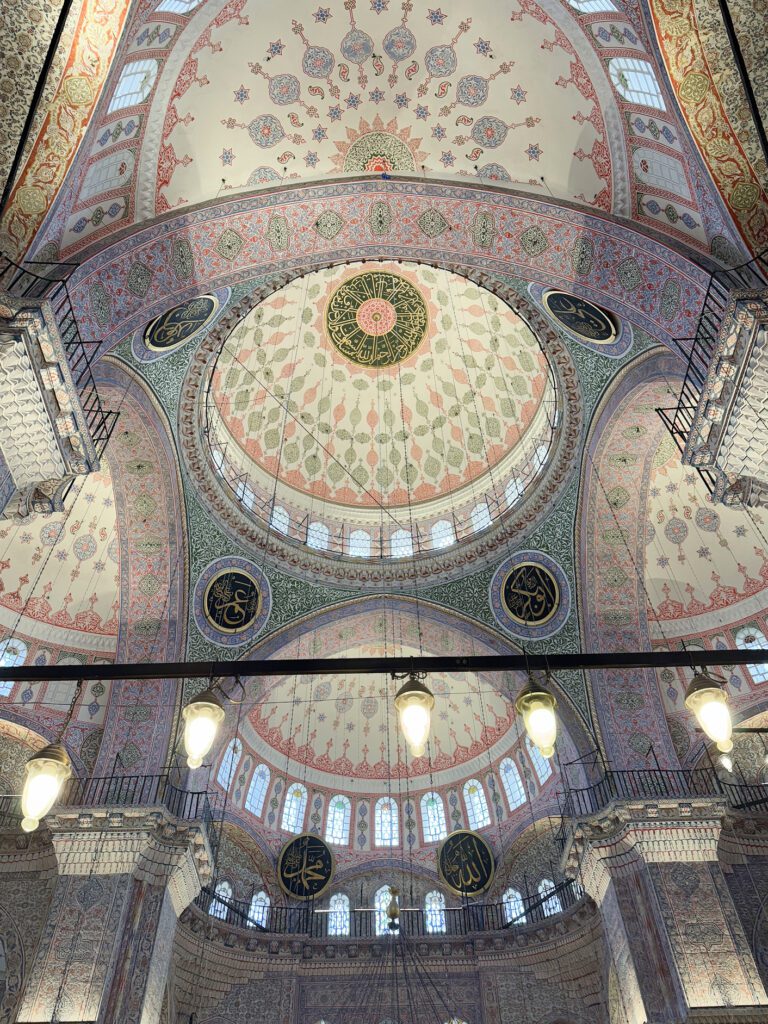
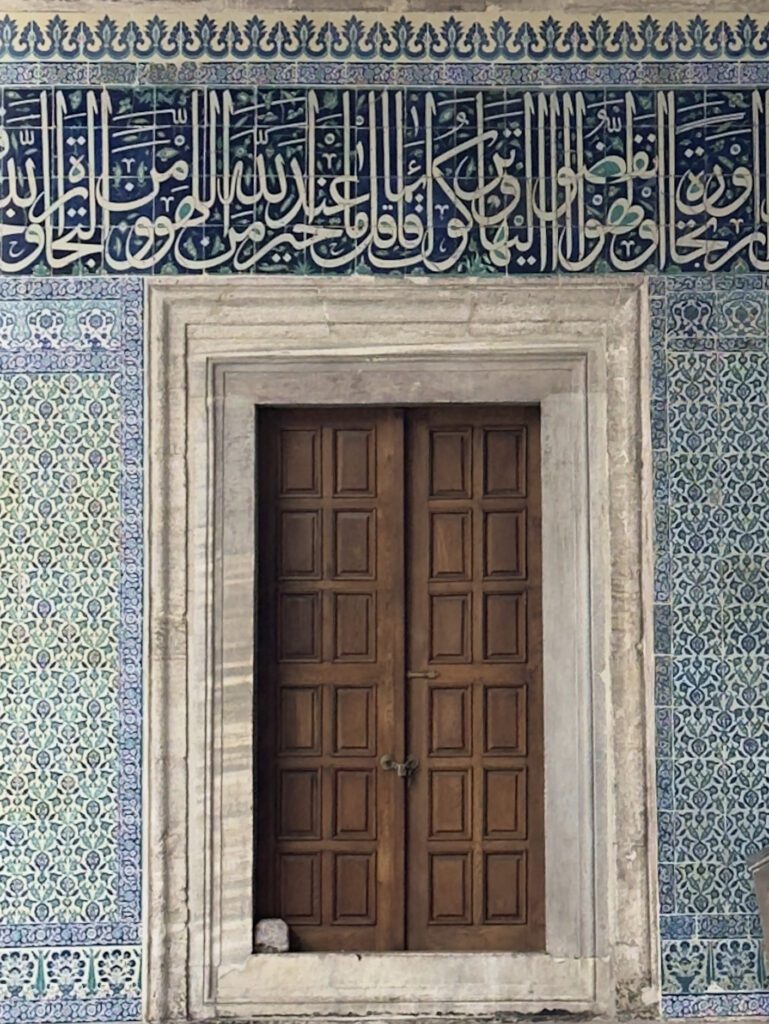
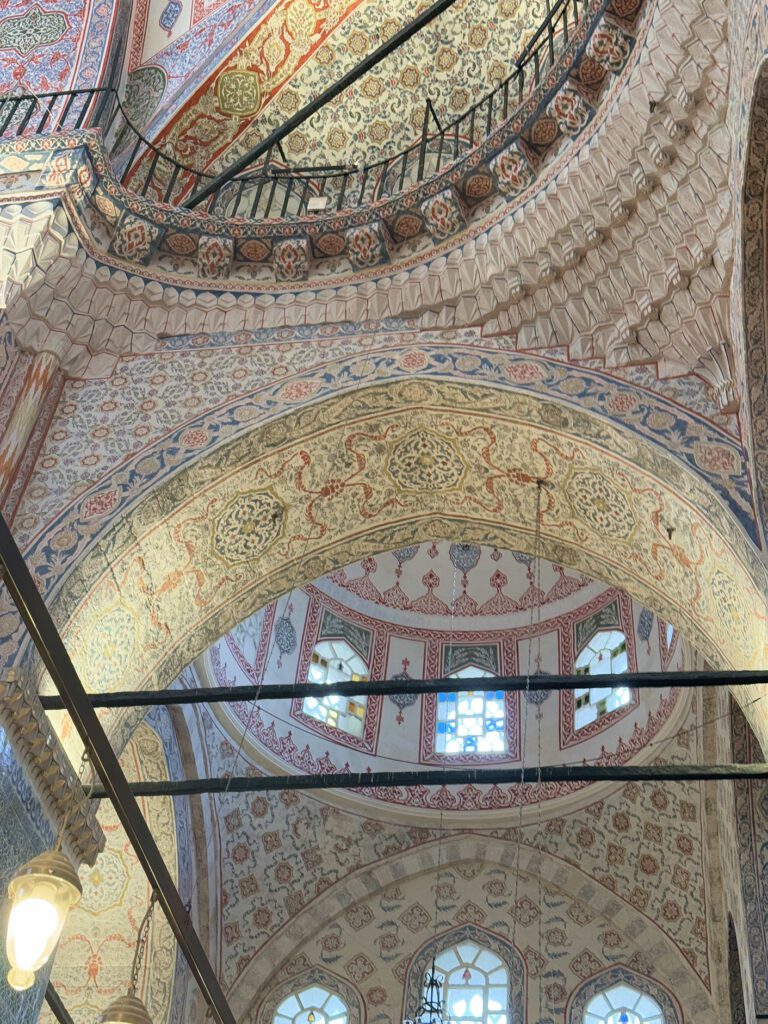
Come here in the morning, before the city fully wakes up, and you might even get the rare Istanbul experience of feeling almost alone in a beautiful historical place, in a city that is usually packed with people.
Hafiz Mustafa 1864: Where to Try Turkish Sweets and Coffee
Right next to the mosque, make a sweet stop at the legendary Hafiz Mustafa 1864. You’ll see their branches all over the city, so if this one is busy, you can always try another near your hotel later.
The place is hard to miss, a very recognizable sign, bright display and often several floors. On the ground floor you’ll find a shop packed with beautifully boxed Turkish delights, chocolates and other sweets, the kind of souvenirs that look like they came straight out of a fairytale. But that’s not why we’re here (at least, not yet).
Head upstairs or walk further inside to find the café area, where you can actually sit down and taste everything. The dessert menu feels almost endless, but luckily it comes with pictures, so you don’t have to pretend you know every Turkish word on the list. Prices are a bit higher than average, but for the variety and quality, it’s absolutely fair.
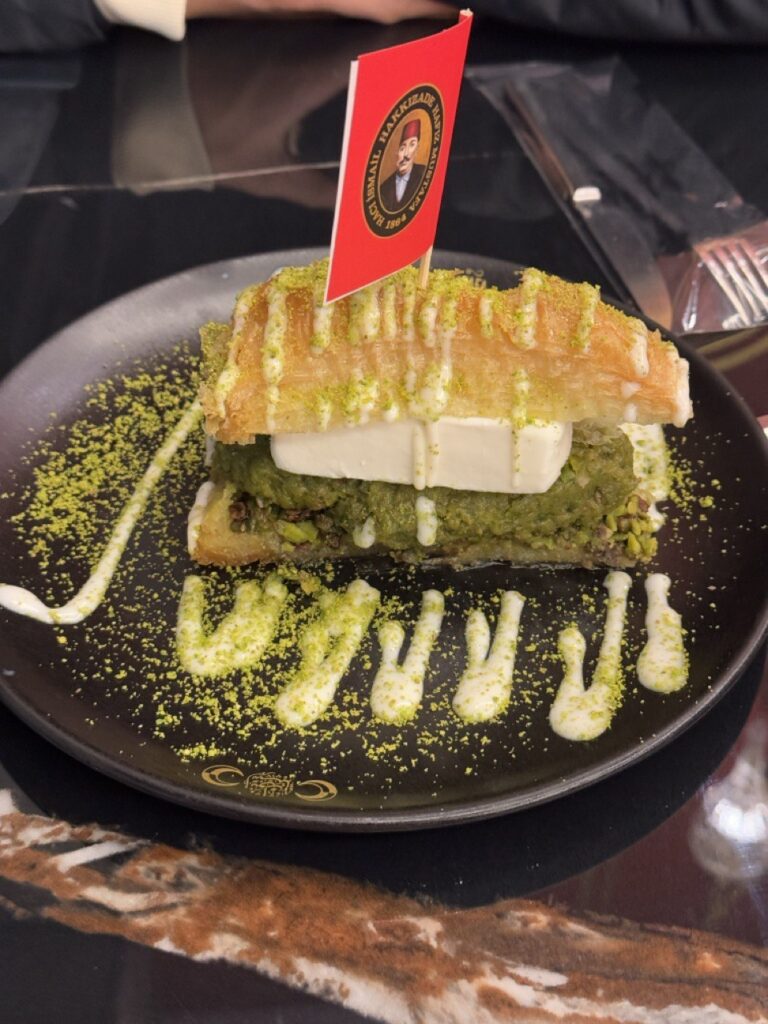
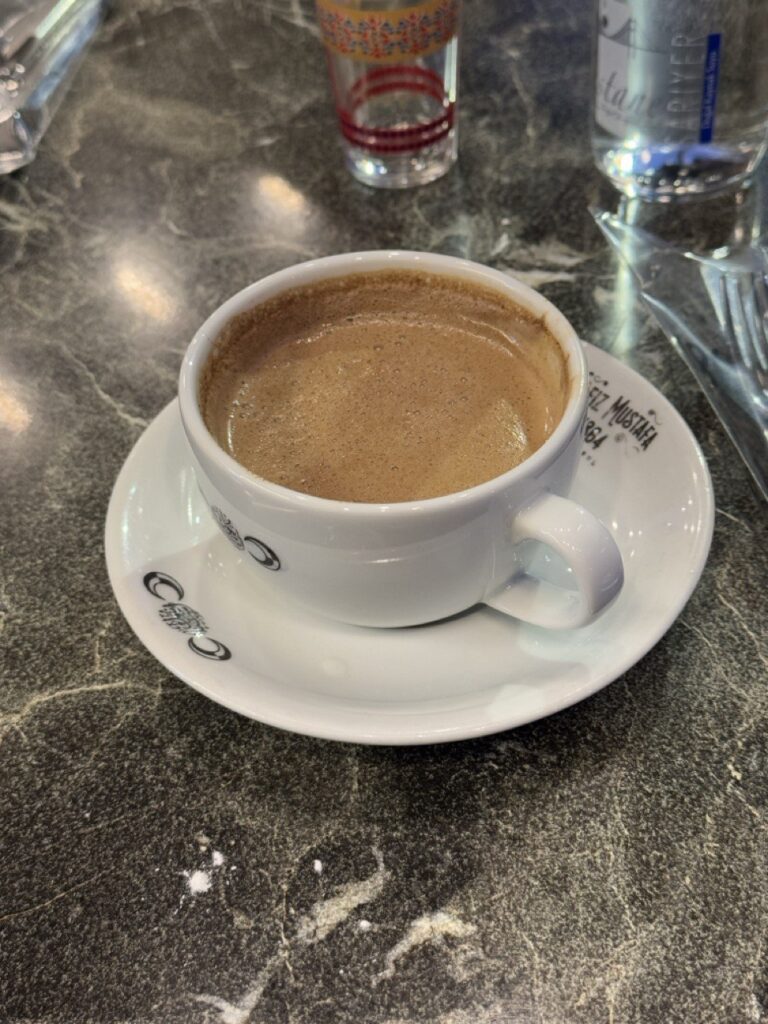
Their Turkish coffee is also great, and they serve it in several versions. If you’re into trying something special, I’d really recommend the one with halva, it’s rich, sweet and very “this is definitely not my last coffee today” energy.
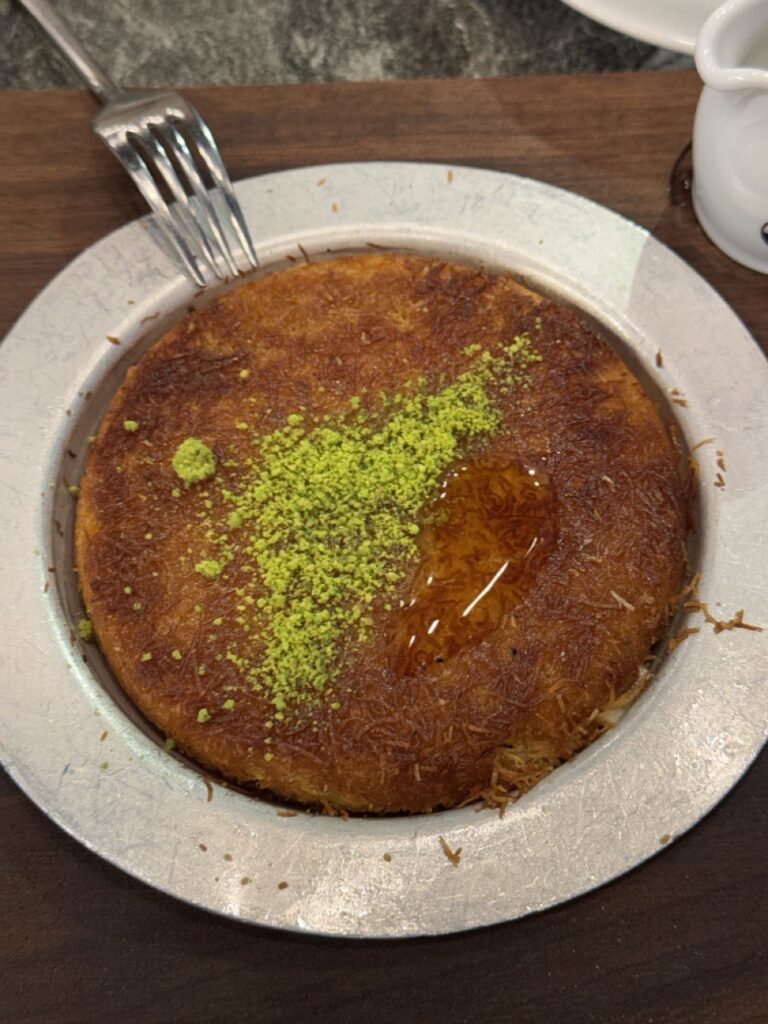
And then there’s the star, a warm Turkish cheese dessert — künefe. It may sound a bit strange at first, cheese as dessert? But I trusted the waiter’s recommendation and did not regret it for a second. It’s that perfect mix of stretchy, melty cheese, sweet syrup, and crispy edges, basically the kind of dessert you keep going back for “just one more bite.”
🎁 Souvenir tip: If you’re after a fancy gift box, this place is perfect. But if you’re more into “best sweets, best price,” I found an amazing chain called Tugba where you can stock up on their own-made sweets, teas, and spices for way less, literally a few times cheaper than the touristy spots. They have several stores around Istanbul (I’ve marked them on the map), and you can also check them out here: https://www.tugbakuruyemis.com.tr/
Hagia Sophia Tickets: What to Know Before You Go
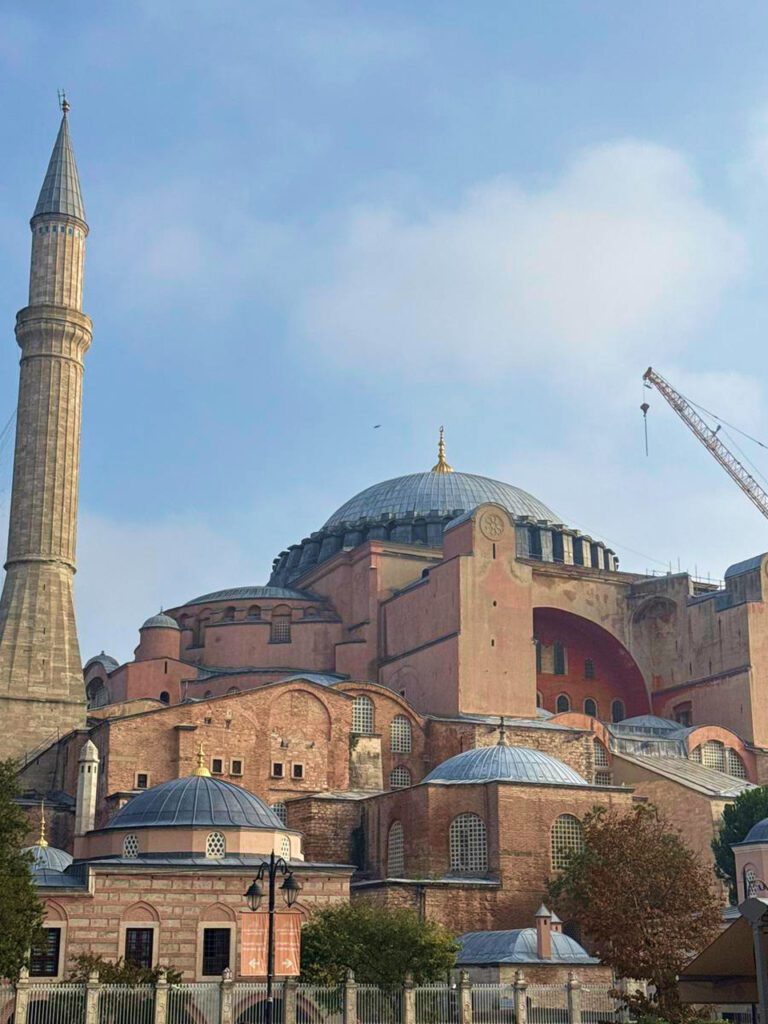
Time for Hagia Sophia, probably the most famous landmark in Istanbul, with more than 1,500 years of history behind it and a reputation as one of the most incredible buildings in the world.
It was originally built in 537 as a Christian church during the Byzantine Empire and for centuries was the largest church in the world. It’s often described as the ultimate symbol of Byzantine architecture and had a huge influence on how sacred buildings were designed later in many other countries.
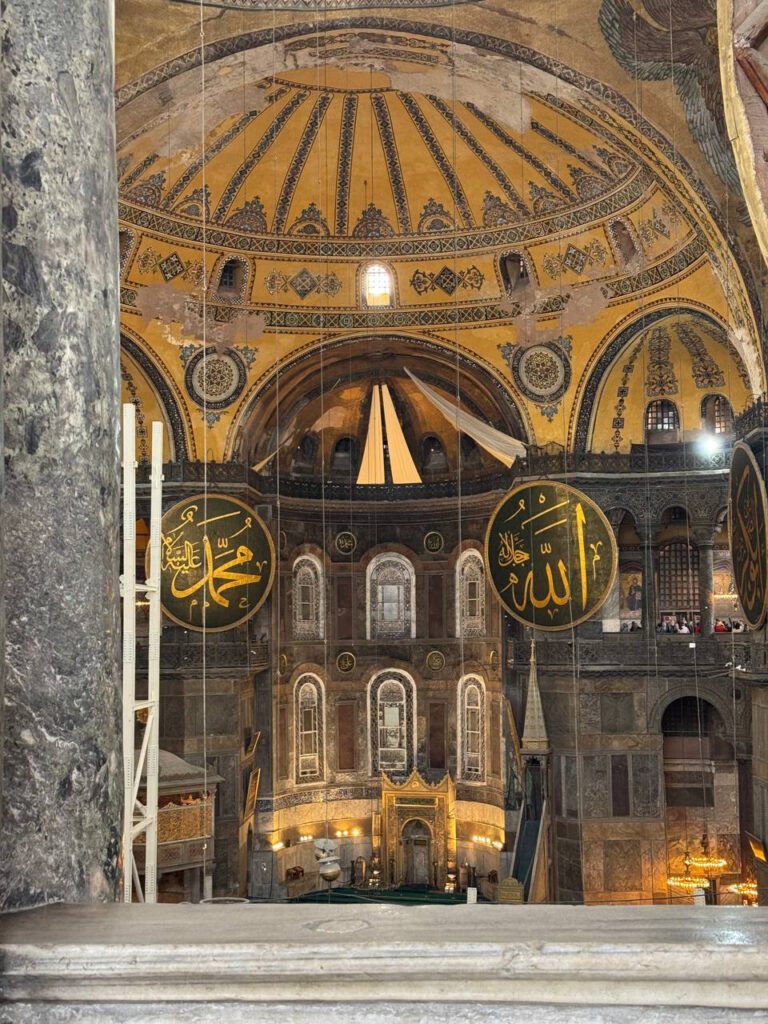
What I loved most is that you can still see traces of all those layers inside. If you look closely, you’ll find restored Christian mosaics and frescoes from the old church period, sitting side by side with Islamic elements from later times, it’s like walking through a very beautifully decorated history book.
After the fall of Constantinople in 1453, Hagia Sophia was turned into a mosque, minarets were added, and parts of the interior were adapted to match its new role. In the 20th century it became a museum, and today it’s officially a mosque again. The difference is that visitors now enter through a separate, paid tourist section, so unlike most mosques in Istanbul, you’ll actually need a ticket to go inside as a traveller.
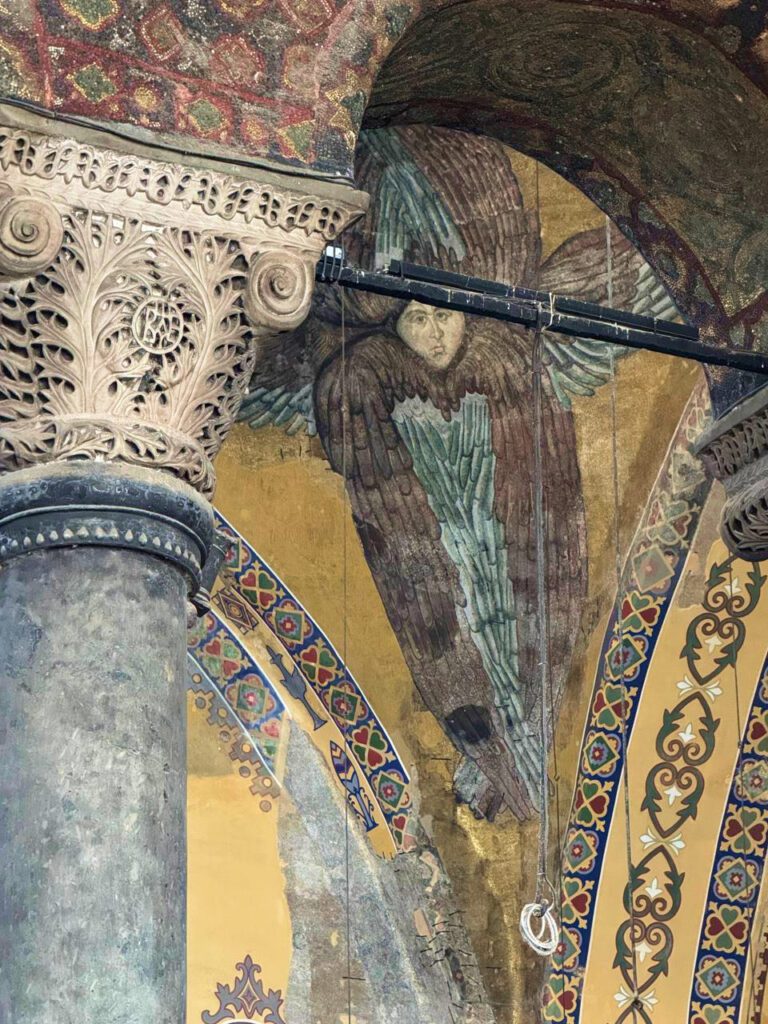
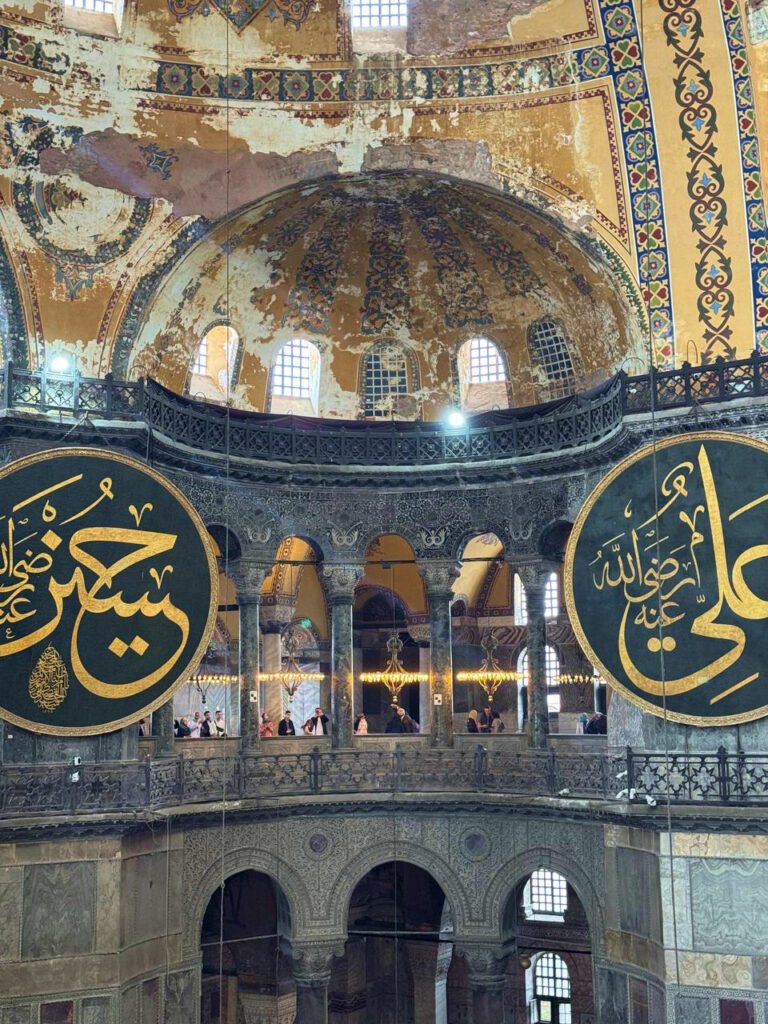
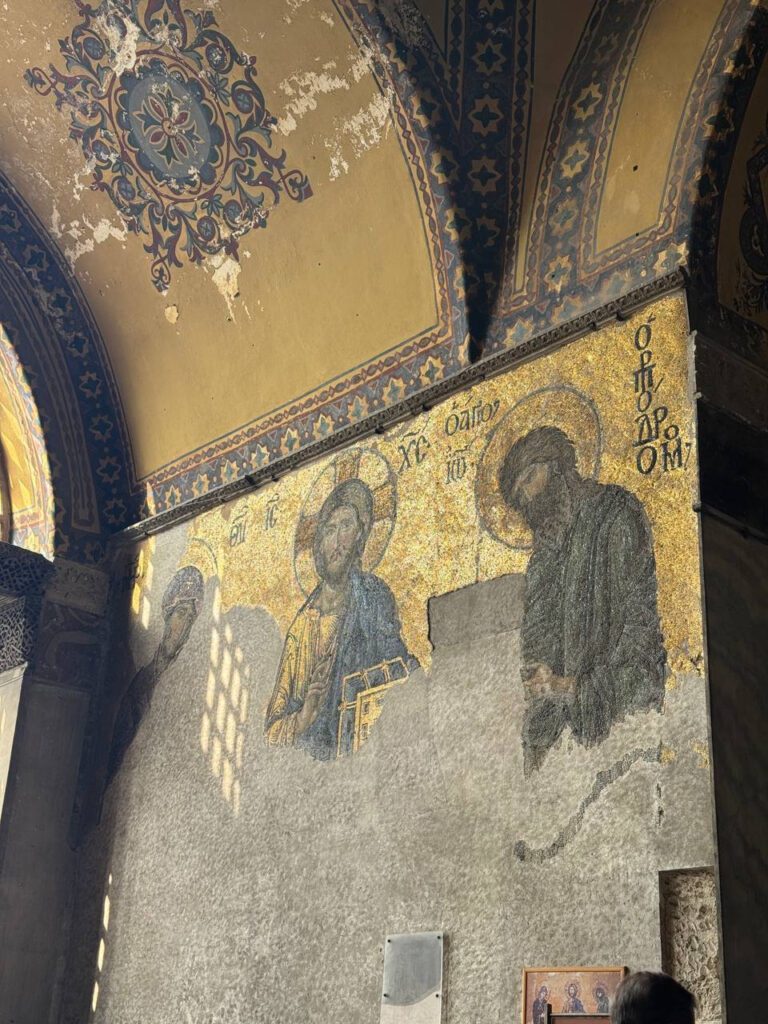
A lot of people recommend buying tickets or tours online in advance, and that can make sense in high season. But be careful, many of those offers are quite overpriced and often bundle Hagia Sophia with other mosques that are actually free to enter. You end up paying extra for things you could visit on your own for zero.
If you’re not visiting in the absolute peak months and you don’t mind waiting around 20 minutes, it’s usually totally fine to just buy your ticket at the entrance. And don’t worry about being there the exact second it opens, there’ll be a queue anyway. Honestly, it’s easier to accept it as part of the experience and enjoy the city at your own pace instead of stress-running from one thing to the next.
When you get your ticket, you’ll probably see different options: a basic entrance and more expensive deal that include extra “museum” part. Staff or sellers might try to gently push you towards the pricier option, saying that with the cheaper one “there’s nothing to see”, which is a bit funny coming from an official ticket counter.
I went with the cheaper option because I was mostly there for the building itself. The space, the dome, the atmosphere, and all those little details that show its layered history. And honestly, I didn’t regret it for a second.
I still remember standing under the main dome, trying to take it all in. The mosaics, the Arabic calligraphy, the soft light pouring through the windows. It felt kind of surreal to realise how many different eras and empires have stood in that exact spot and looked up at the same ceiling long before me.
📍Hagia Sophia Essentials:
Opening hours: 9:00 AM – 7:00 PM (with short closures during the 5 daily prayer times, and the biggest closure is usually Friday morning until around 2:30 PM for noon prayers)
Duration: 1.5–2 hours including the entrance queue
Price: €25
The Blue Mosque in Istanbul: What to Expect Inside?
Just a five-minute walk from Hagia Sophia you’ll find the Blue Mosque, probably the most famous active mosque in Istanbul and one of the most visited in the world. And honestly, it deserves the hype.
Inside, it’s all about the tiles. The walls are covered with thousands of Iznik tiles, named after the Turkish town where they were made. They’re an Ottoman take on Chinese ceramic techniques and styles, but with a very local twist. You’ll recognise the traditional white-and-blue colours, but the patterns themselves are pure Ottoman aesthetics: flowers, leaves, vines and all kinds of delicate plant motifs. That blue glow from the tiles is exactly what gave the mosque its nickname, the Blue Mosque.
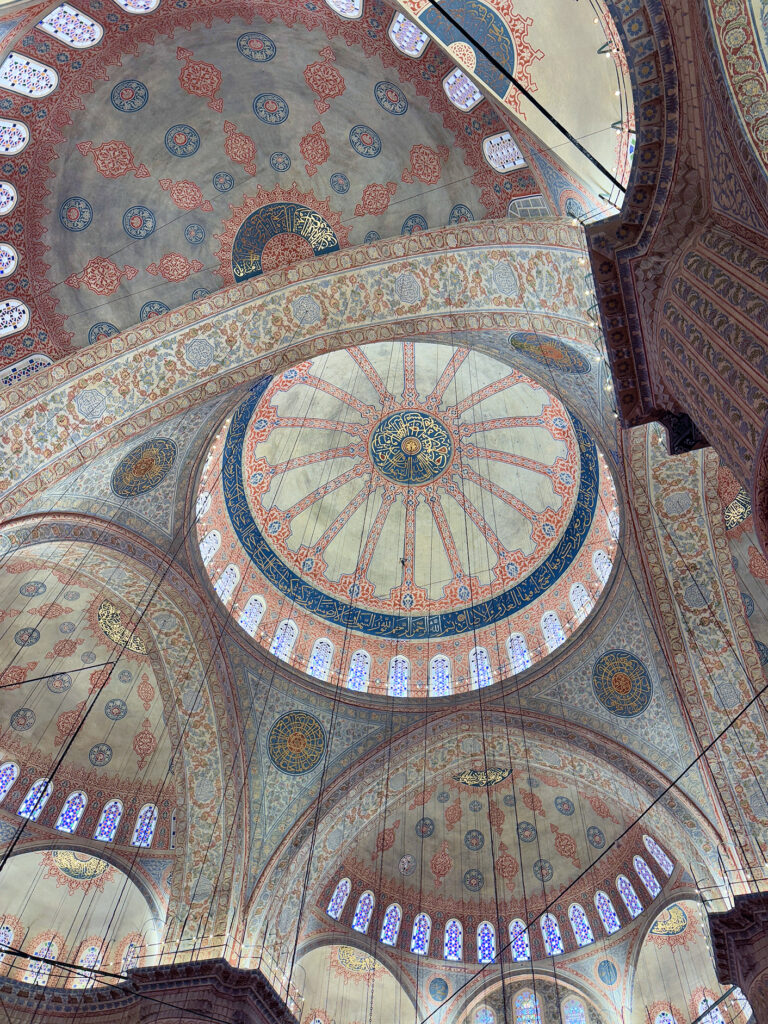
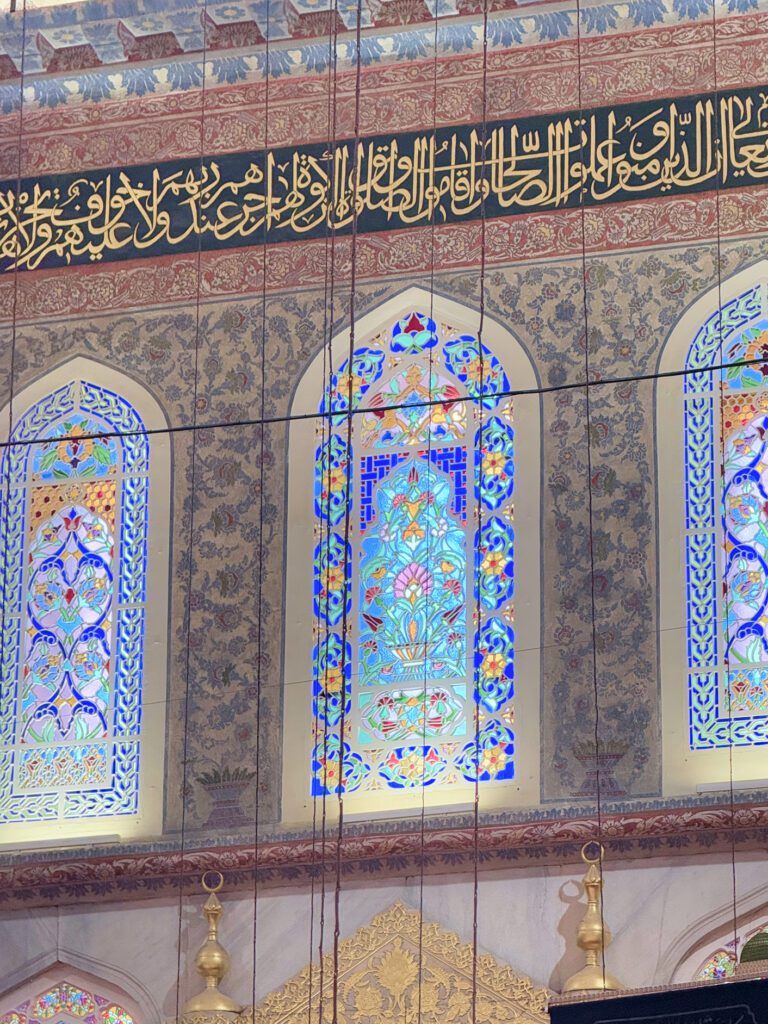
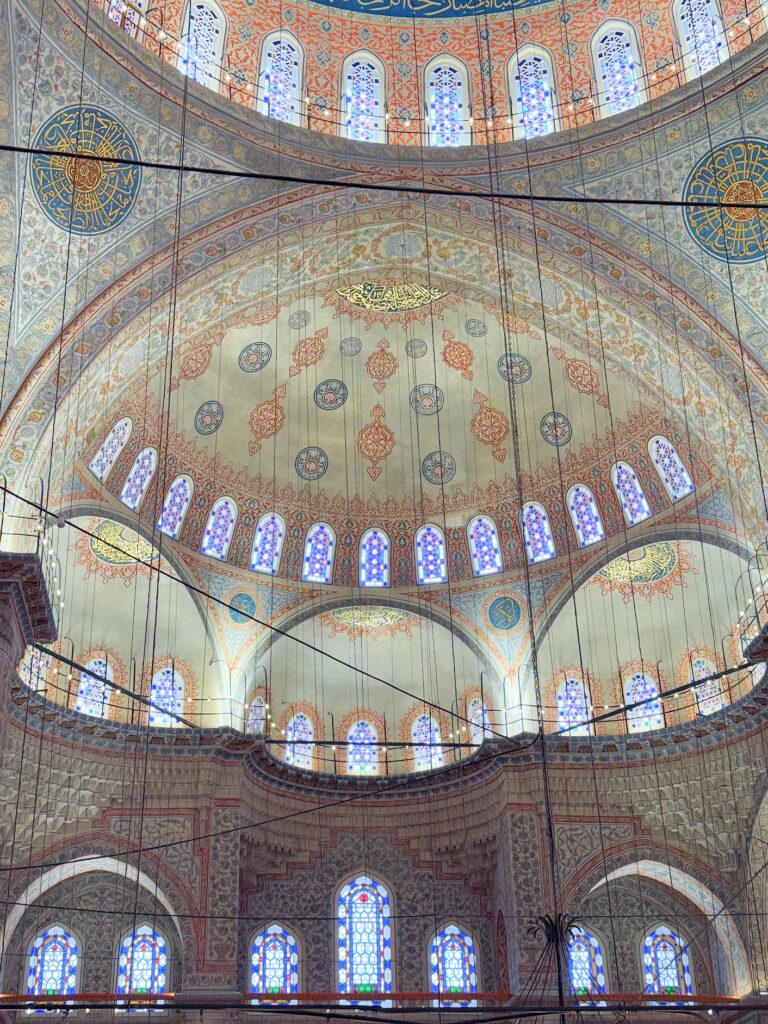
Another fun bit of history, when it was built in the 17th century, Sultan Ahmed I wanted to show his devotion to Islam and make a statement. His goal was to create a mosque that would rival, or even surpass, the greatness of Hagia Sophia. Whether he succeeded or not, that’s something you can decide for yourself when you visit.
What’s certain is that the Blue Mosque is still considered one of the most famous architectural masterpieces in the world and an absolutely essential stop on any Istanbul trip.
Topkapi Palace Istanbul: Tips for the Best Visit Experience
This is the one place where you really want to give yourself time and energy. Topkapi isn’t a “quick stop” kind of sight, I’d plan at least three hours here.
From the mid-15th century until the construction of Dolmabahçe Palace in the 19th century, Topkapi Palace was the administrative heart of the Ottoman Empire and the main residence of the sultans. It was the symbol of power, wealth and culture, and you feel that the moment you walk in. The complex is huge —beautiful courtyards, intricate architecture, and a whole collection of museums spread across the grounds.
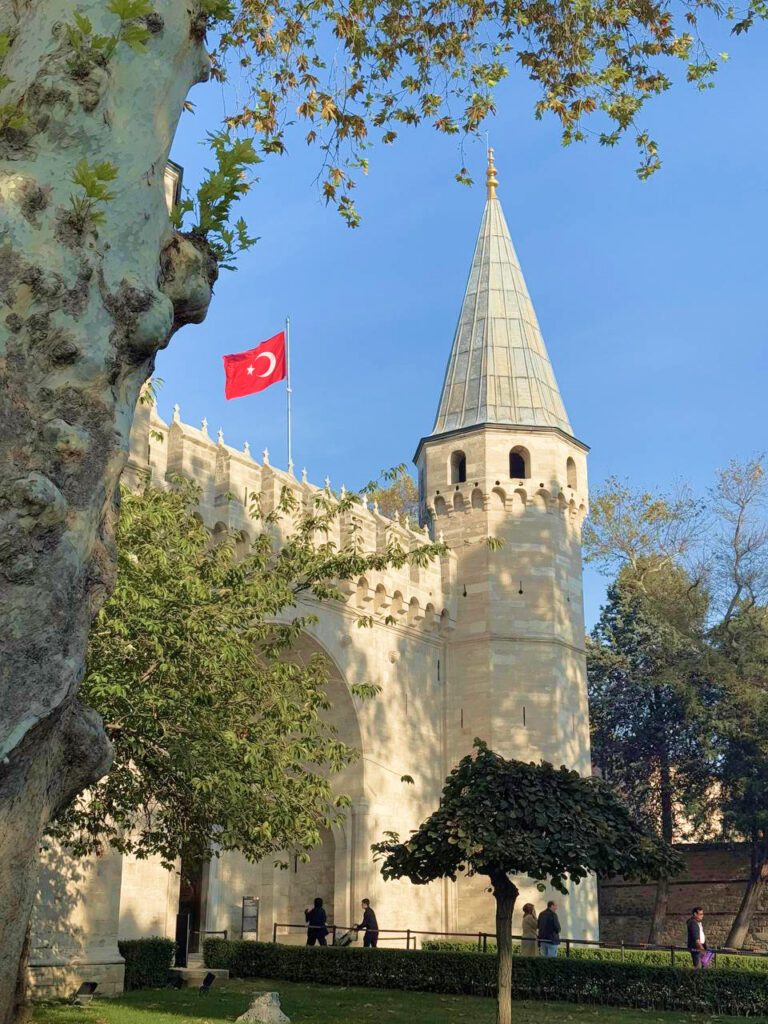
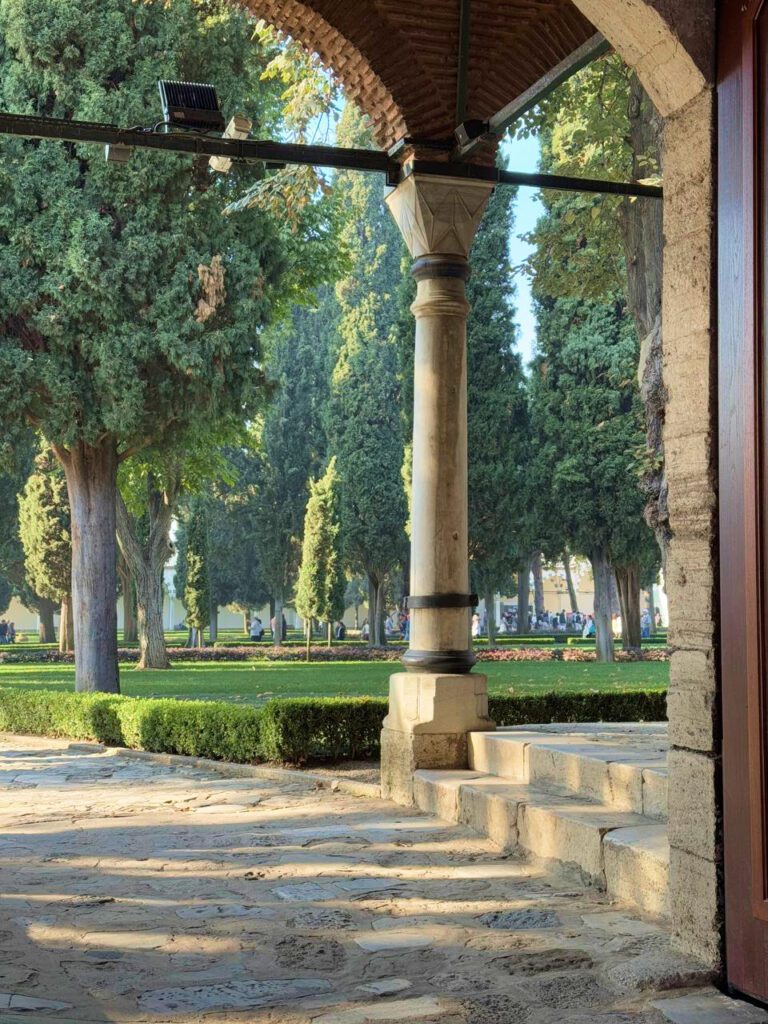
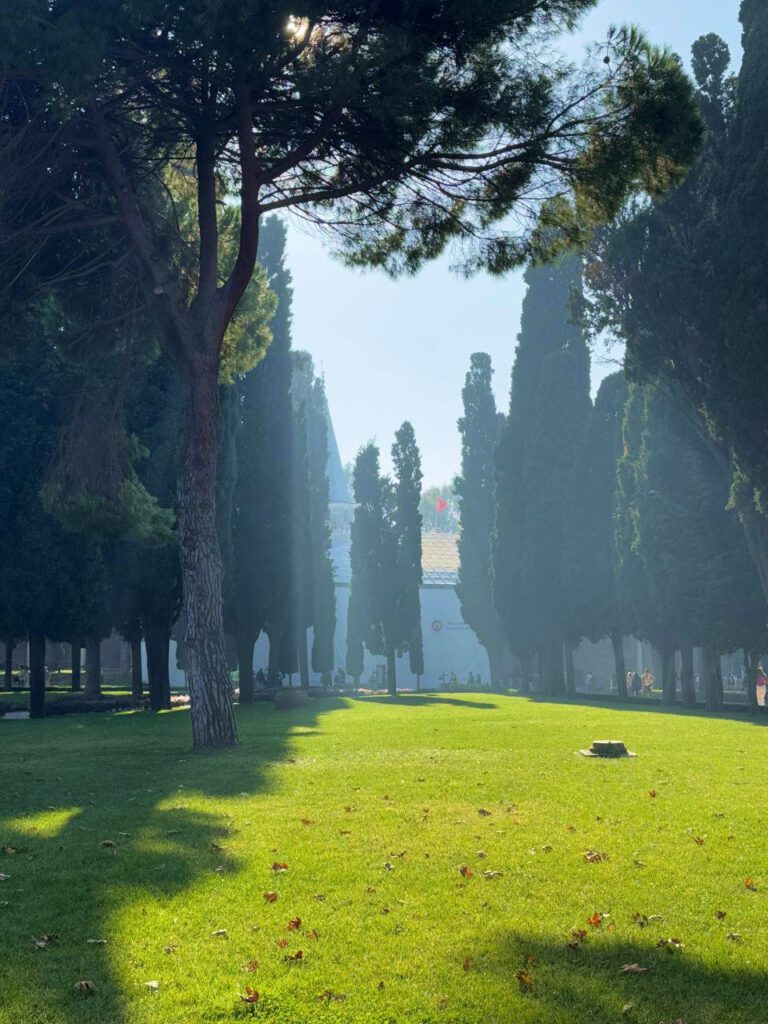
Walking through Topkapi, you realise it’s not just about shiny treasures and glass cases. A lot of the everyday things from the sultans’ time are still there too — baths, bedrooms, corners where people actually sat, ate, argued and relaxed. Some rooms feel like classic museum spaces, but others are more like someone pressed pause a few centuries ago and just left everything as it was. Topkapi is full of those small reminders that real people actually lived here, not just sultans from history books, but whole lives hidden behind these walls.
Because of all this, be ready for queues to some of the smaller museum sections, even in low season. Many rooms have a limit on how many people can be inside at once, so you might have to wait a bit, but the upside is that once you’re in, you’re not squeezed shoulder-to-shoulder and can actually look at things in peace.
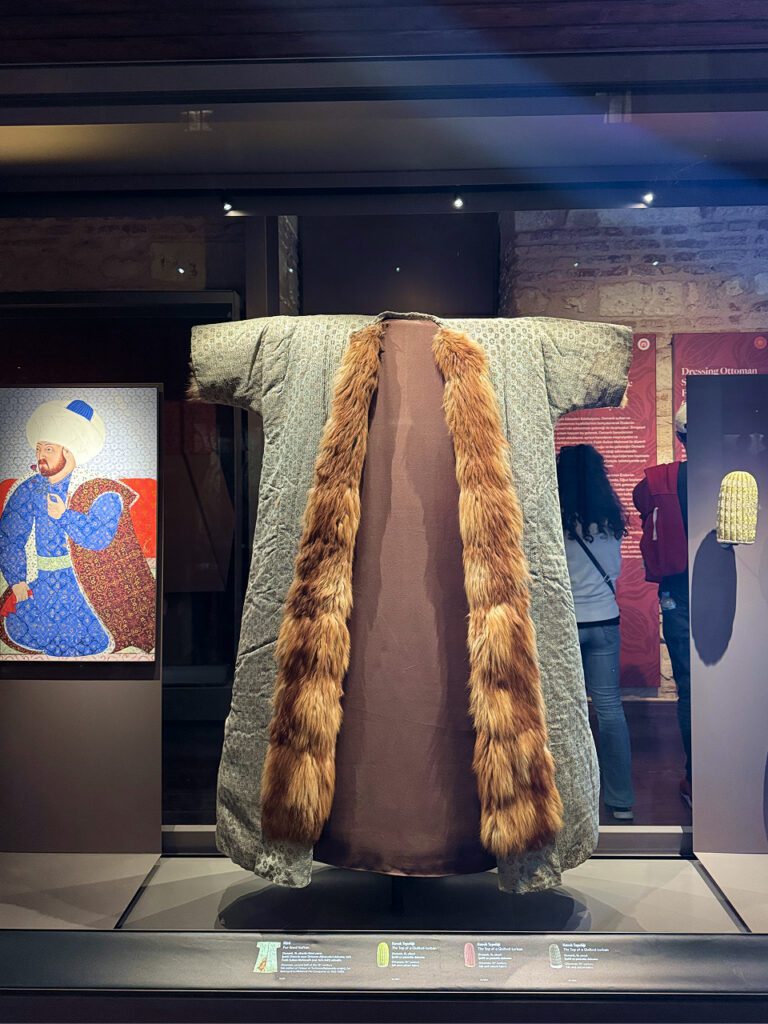
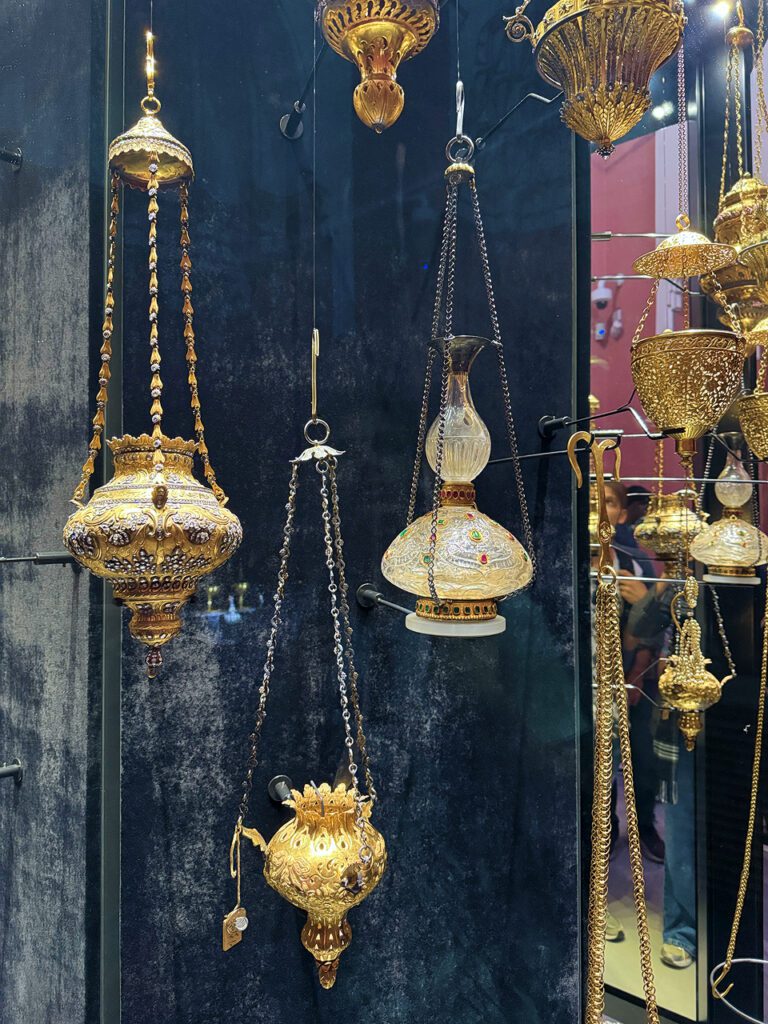
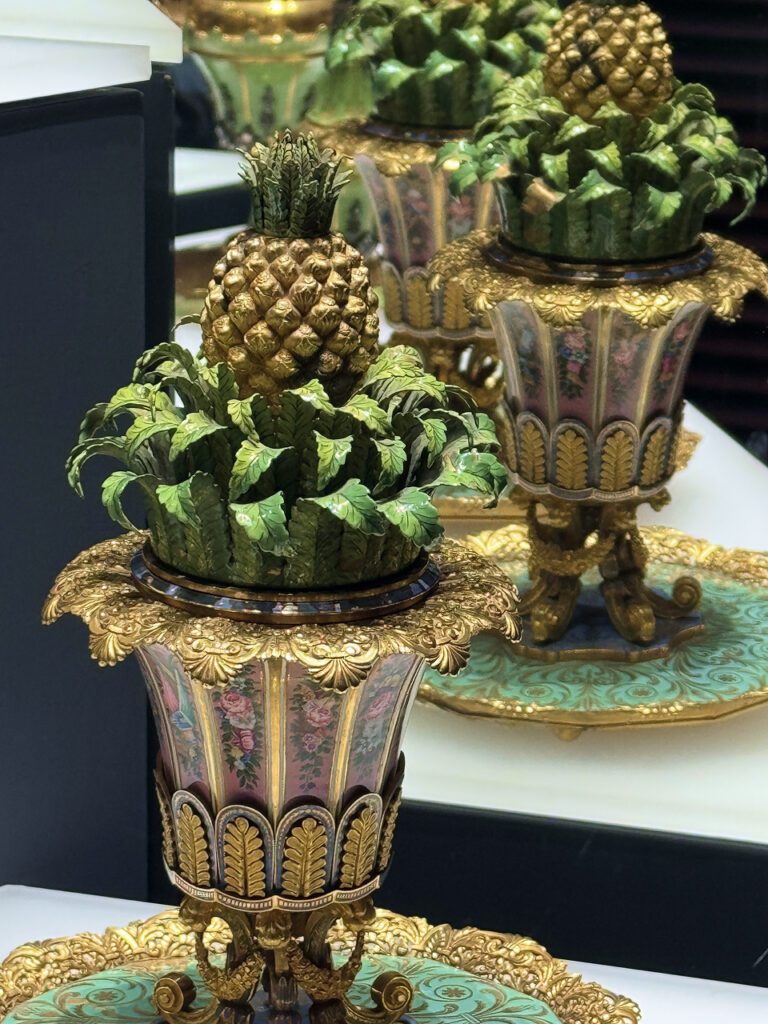
One question I hear all the time is: Topkapi or Dolmabahce if you only have time or budget for one? If you’re choosing just one palace, I’d go with Topkapi. It’s older, bigger, and just way more fascinating if you want the full history-meets-drama side of Istanbul.
Just like with Hagia Sophia, be careful with online tickets. A lot of websites sell them for more than you’d pay at the entrance, and some don’t include access to the Harem or the Hagia Irene church, which are two of the most interesting parts of the whole visit.
Also, at the entrance you’ll see QR codes for downloading an audio guide app in different languages. It’s free, but personally I’m not sure it’s worth the hassle. The content is quite basic, and the tracks are split into tons of tiny 1–2 minute pieces. Instead of enjoying the palace, you end up constantly fiddling with your phone, switching from one audio clip to another. Not my favourite way to explore.
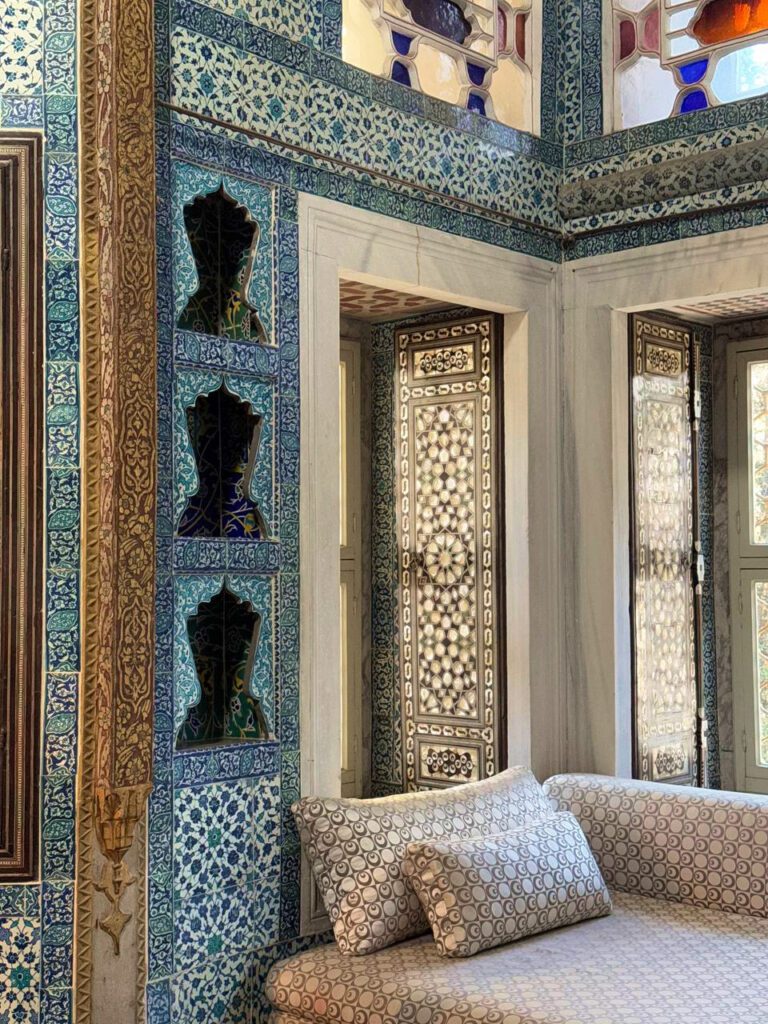
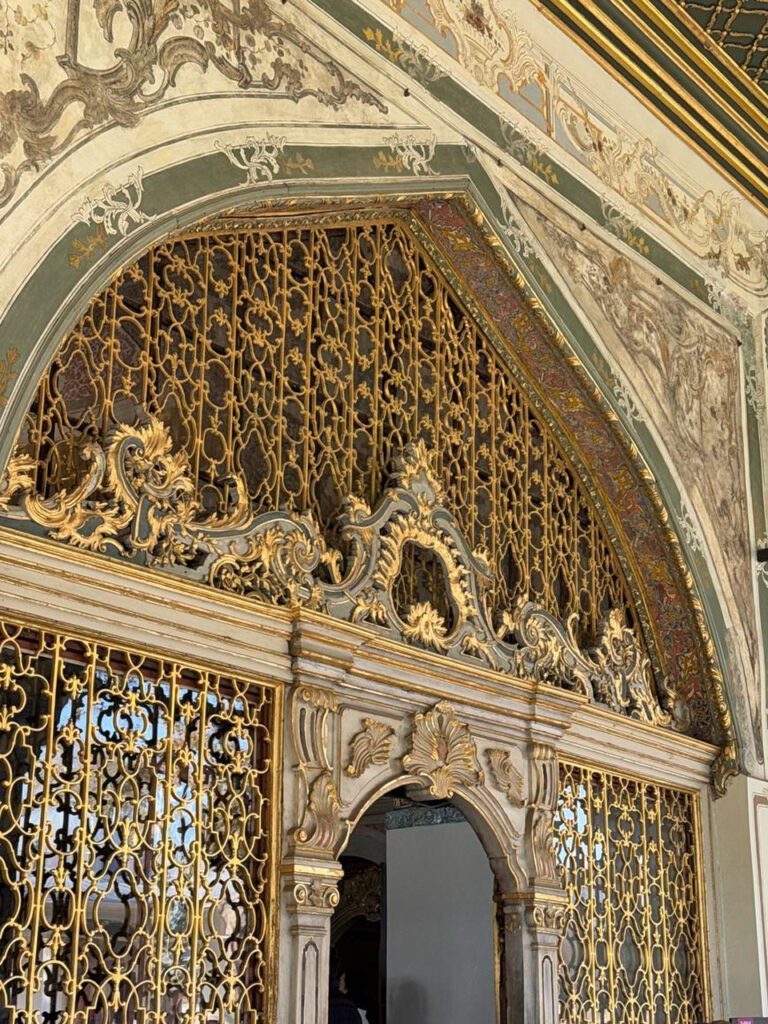
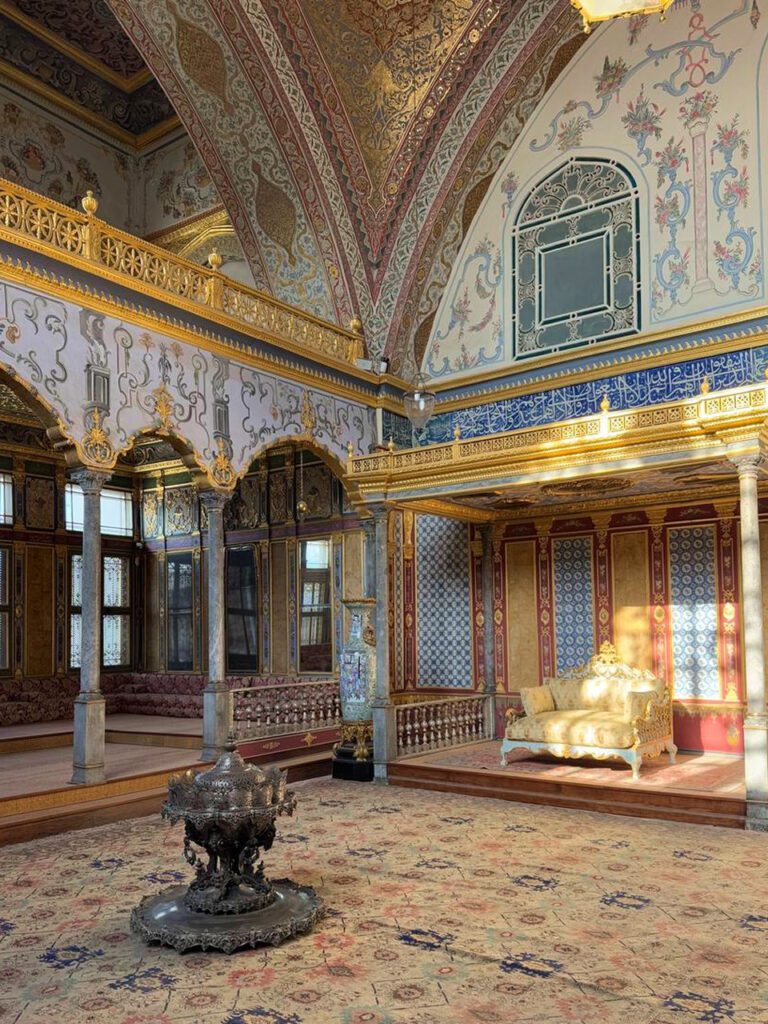
What I do strongly recommend is buying the full ticket that includes everything:
The Harem is a huge part of the story and absolutely worth visiting. Back in the day, it was basically a city within a city, a closed world where the sultan, his wives and the women of the court lived. The word “harem” literally means “forbidden place”, and no man except the sultan, his close male relatives and the eunuchs who guarded it were allowed inside.
The church of Hagia Irene is strangely underrated. When I walked in, it was just me and one guard. It doesn’t feel like a typical polished museum, more like an old, quiet, slightly forgotten church. It’s a beautiful place to end your visit — simple, echoey, a bit raw, and very atmospheric. It felt like stepping back into a different century for a few minutes.
📍 Topkapi Palace Essentials:
Opening hours: 9:00 AM – 5:00 PM (Closed Tuesdays)
Duration: 3–4 hours to explore the palace, Harem, and Hagia Irene
Price: €55
Gülhane Park Istanbul: The Perfect Place to Rest After Sightseeing
On your way out of Topkapi Palace, make sure to step into the beautiful Gülhane Park. It’s one of the oldest and prettiest parks in Istanbul and used to be the sultans’ private garden back in the day.
In spring, especially in April, the park turns into a real-life postcard. Thousands of tulips in every possible colour cover the lawns and flowerbeds. It looks almost painted, and walking between those tulip beds gives you exactly that light, festive feeling people come to Istanbul for during tulip season.
Gülhane is the perfect place to take a quiet pause after a heavy day of mosques and museums. Even though it’s just a few steps away from the tourist crowds, it somehow feels much calmer inside. You can stroll in the shade of old trees, sit by a fountain or a decorative pool, and let your brain digest everything you’ve seen so far before you move on to the next chapter of the city.
Basilica Cistern Istanbul: Don’t Miss These Details Inside
This is honestly one of my favourite places in Istanbul, something completely different, a bit mysterious, and almost cinematic.
Cisterns in Istanbul are ancient underground water reservoirs that once stored fresh water for the city during dry periods or sieges. Most of them were built in the Byzantine period and are hidden beneath the streets you’re casually walking on. There are actually a few hundred cisterns under Istanbul, but only a handful have been restored and opened to visitors. The largest and most atmospheric of them is the Basilica Cistern, dating back to the 6th century. Walking through it feels like wandering inside a secret underground temple.
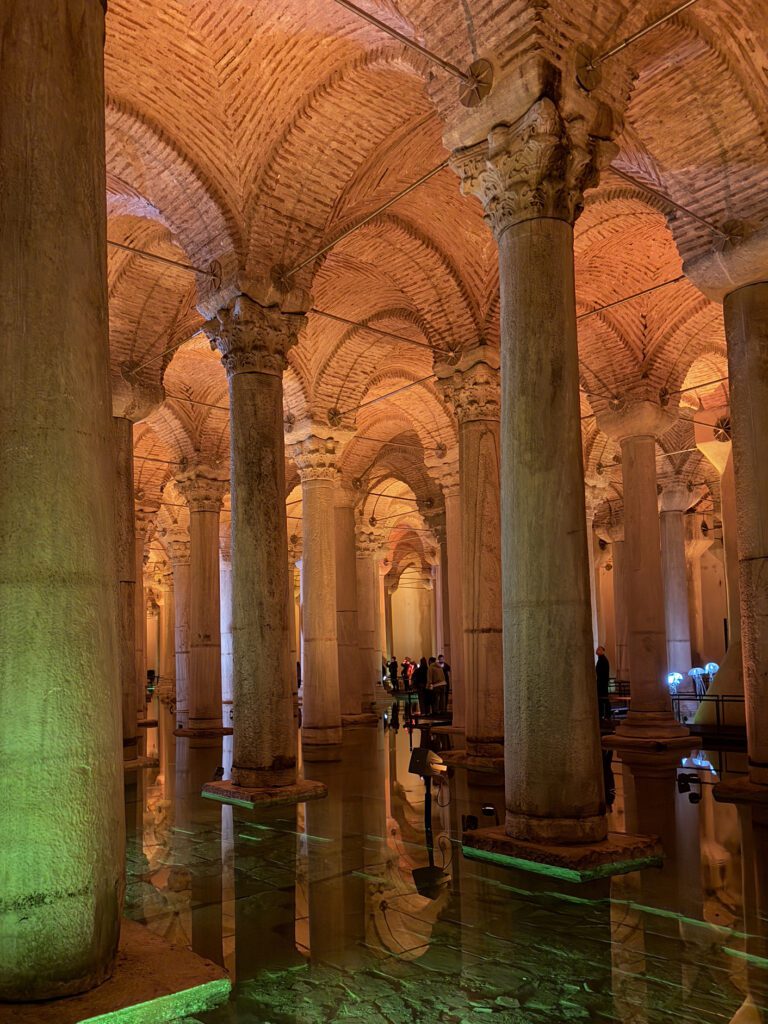
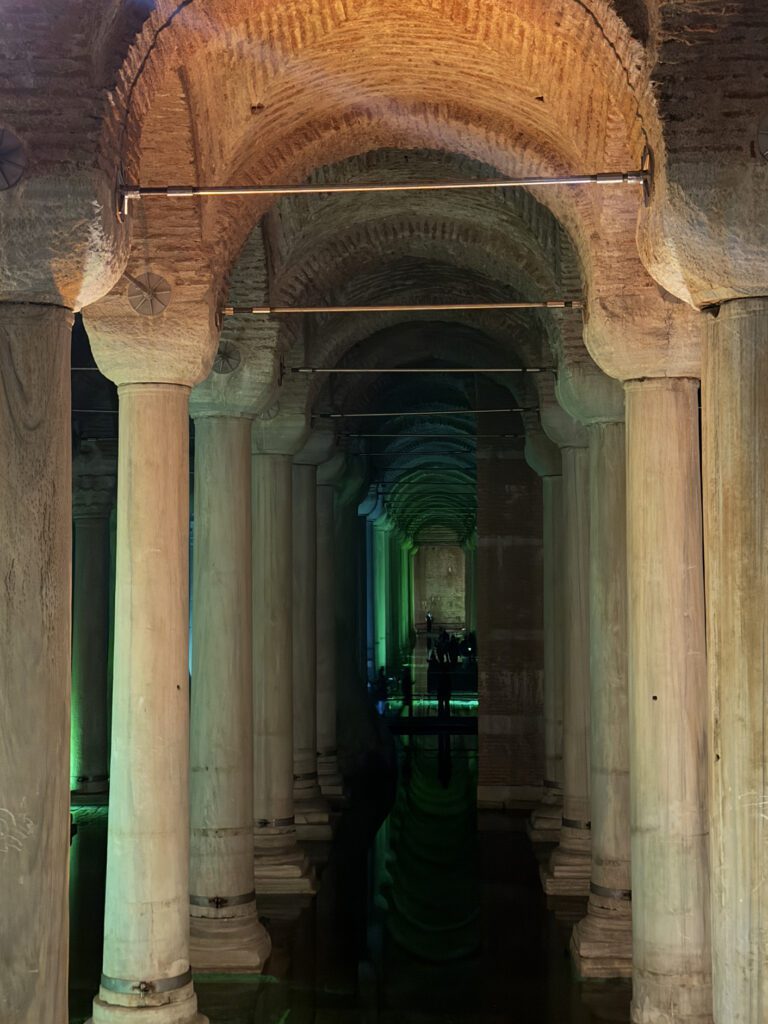
One of the coolest things about it is that none of the columns were made specifically for this cistern. They were all reused from older temples, public buildings and ruins. Because of that, every column looks a bit different, and this mix of styles and shapes is super impressive.
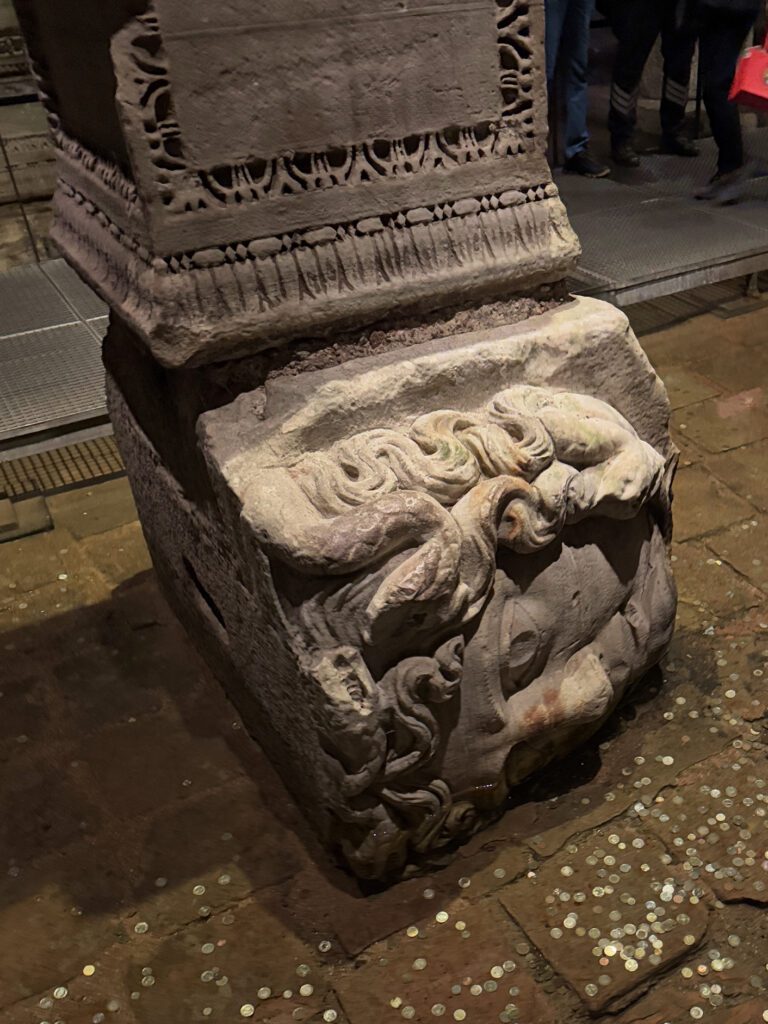
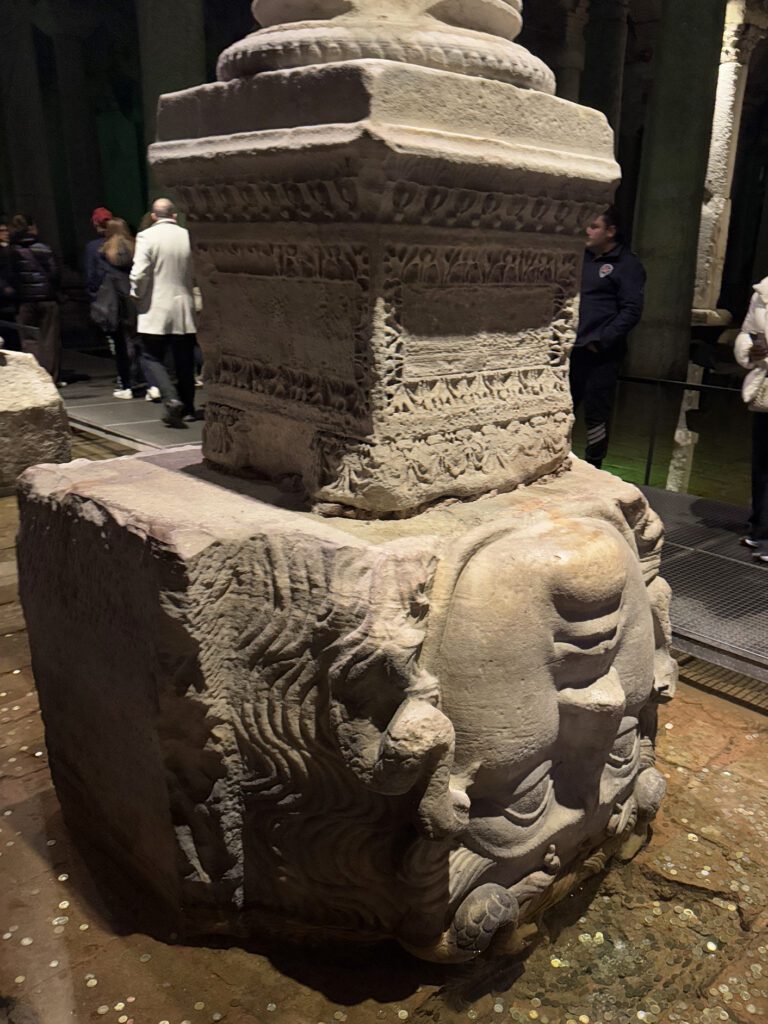
The most famous features are the two columns with Medusa heads at their base. One is sideways, the other is upside down. According to legend, they were placed like this to “neutralise” Medusa’s power to turn people to stone with her gaze. Whether you believe that or not, they’re definitely a must-see, make sure you hunt them down while you’re there. Another well-known column is the one with carved, crying eyes, said to be a tribute to the hundreds of slaves who died during the construction of the cistern.
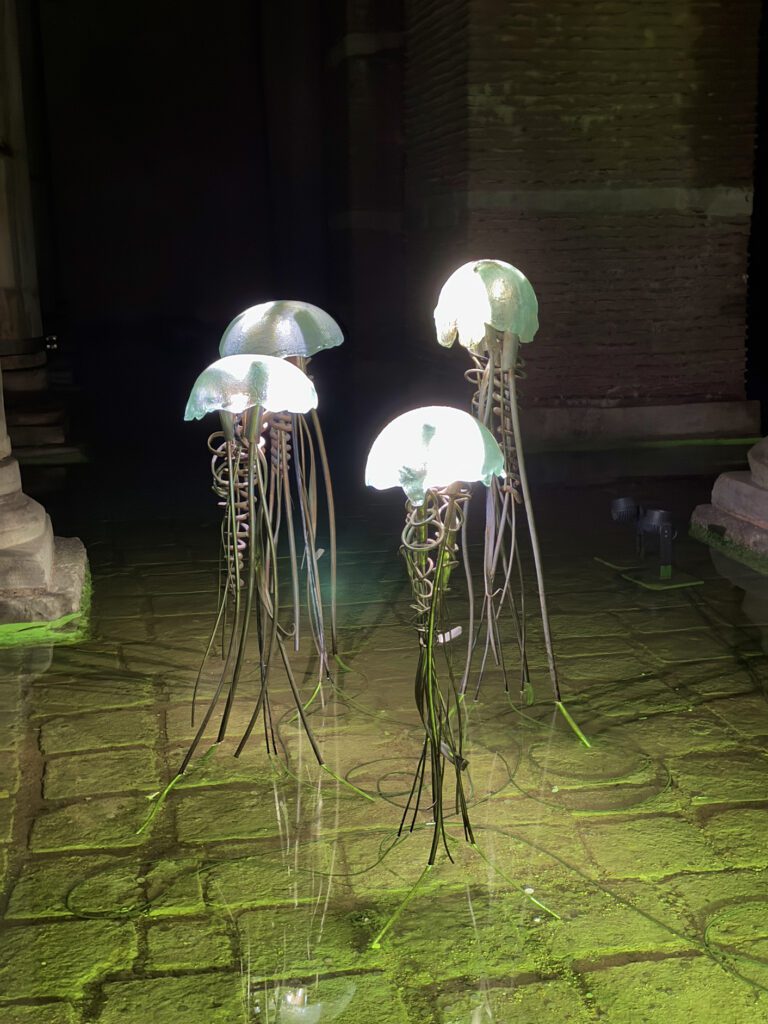
Recent restorations have added even more atmosphere. There are a few modern art installations scattered around, but the main magic is in the lighting. Coloured lights reflect off the water, throwing patterns onto the ceiling and columns and making the whole place feel different every few minutes. It’s beautiful… and slightly annoying if you’re trying to get the perfect photo and the light suddenly changes at the last second. Stay a little longer to see the cistern under different lighting moods.
Be prepared for it to be a bit cool and damp inside, and the floor can be slightly slippery, which, to be honest, feels like a blessing if you’re visiting during the summer heat.
One practical thing: they only accept card payments now. Cash isn’t an option at the ticket office, so make sure you have a working card with you.
📍 Basilica Cistern Essentials:
Opening hours: 9:00 AM – 6:30 PM (day shift), 7:30 PM – 10:00 PM (night shift)
Duration: about 1 hour if you want to explore all the corners without rushing
Price: €30 during the day, around €50 at night (card payments only)
0 Comments